

ABSTRACT
Background and Aim: Inadequate farm biosecurity can facilitate zoonotic disease transmission and may increase reliance on antimicrobials, particularly in resource-constrained livestock production systems with limited veterinary support. However, evidence integrating farmers’ knowledge, attitudes, and practices (KAP), zoonotic disease awareness, biosecurity adoption, and antimicrobial use patterns remains limited among small-scale livestock farmers in South Africa. This study aimed to assess KAP regarding biosecurity and zoonotic disease prevention, characterize antimicrobial use patterns, and identify factors associated with biosecurity adoption among small-scale livestock farmers in the North West Province, South Africa, from a One Health perspective.
Materials and Methods: We conducted an analytical cross-sectional survey from December 2025 to February 2026 among small-scale livestock farmers in five villages in the Ngaka Modiri Molema District. Using purposive non-probability sampling, 200 farmers were approached, of whom 151 participated (75.5% response rate). Trained personnel administered a structured questionnaire covering biosecurity and zoonotic disease KAP, implementation barriers, veterinary service access, and antimicrobial use. Composite KAP outcomes were constructed, and descriptive, bivariate, and multivariable logistic regression analyses were performed using IBM SPSS Statistics 30.0; p < 0.05 was considered statistically significant.
Results: Only 43.7% (66/151) of respondents were aware of zoonotic diseases. Regular vaccination was reported by 59.6% (90/151), whereas quarantine (16.6%, 25/151), proper waste and carcass disposal (24.5%, 37/151), and regular veterinary access (9.9%, 15/151) were poorly implemented. Lack of infrastructure (73.5%), financial constraints (70.9%), and lack of awareness (64.9%) were prominent barriers. Zoonotic disease awareness was strongly associated with knowledge (adjusted odds ratio [AOR] = 46.64; 95% confidence interval [CI]: 13.78–157.88; p < 0.001), while veterinary visits or consultations were strongly associated with biosecurity practices (AOR = 12.80; 95% CI: 2.35–69.80; p = 0.003). Tetracyclines accounted for 94.8% of reported antimicrobial use.
Conclusion: Substantial gaps exist between favorable perceptions of biosecurity and its practical implementation. Limited veterinary access, inadequate zoonotic disease awareness, structural constraints, and predominant reported use of tetracycline-based products identify priority areas for One Health interventions. Although antimicrobial resistance was not directly measured, these findings identify conditions potentially relevant to AMR risk warranting strengthened veterinary extension, farmer education, biosecurity support, antimicrobial stewardship, and integrated surveillance.
Keywords: antimicrobial resistance, biosecurity, livestock farmers, North West Province, One Health, tetracyclines, veterinary services, zoonotic diseases.
INTRODUCTION
The One Health approach recognizes the interconnectedness of human, animal, and environmental health and emphasizes that changes affecting one component can influence the others [1]. This integrated framework is particularly important for addressing zoonotic diseases, which impose substantial public health and socioeconomic burdens worldwide [1, 2]. Within this framework, biosecurity represents a fundamental component of disease prevention because appropriate measures can reduce the introduction, establishment, and spread of infectious agents within and between livestock populations, humans, and the environment [3, 4]. However, effective implementation of biosecurity remains challenging among small-scale livestock farmers, particularly in resource-constrained settings where limited financial resources, inadequate infrastructure, restricted access to veterinary services, and knowledge gaps may hinder adoption of recommended preventive measures.
Successful implementation of farm -level biosecurity is influenced by farmers’ knowledge, attitudes, and practices (KAP). Greater awareness of zoonotic disease transmission and prevention has been associated with improved compliance with biosecurity measures [5, 6]. Nevertheless, small-scale farmers in rural and resource-limited settings frequently have inadequate access to formal education, veterinary extension, and training on disease prevention and biosecurity. Studies conducted in low- and middle-income countries have demonstrated substantial discrepancies between knowledge of disease risks and implementation of recommended preventive practices [7–9]. Even when farmers recognize the importance of zoonotic diseases, economic constraints, cultural practices, misconceptions, and competing livelihood priorities may limit adoption of biosecurity measures [10]. Therefore, assessment of KAP is important not only for identifying knowledge deficits but also for understanding behavioral and structural factors that influence implementation of disease prevention practices.
In South Africa, zoonotic diseases remain important concerns for public health and livestock production, particularly in small-scale and communal farming systems where close interactions among humans, livestock, wildlife, and shared environments may facilitate pathogen transmission [11–13]. Important zoonoses reported in the country include brucellosis caused by Brucella abortus, bovine tuberculosis caused by Mycobacterium bovis, rabies, anthrax, and Rift Valley fever [11–13]. These diseases can adversely affect livestock productivity through reproductive losses, morbidity, mortality, and trade restrictions while simultaneously posing risks to human health [11–13]. Despite established disease control programs, limited access to veterinary services, insufficient disease awareness, and inconsistent implementation of biosecurity measures remain important constraints among small-scale livestock producers [11, 12]. Understanding farmers’ KAP regarding biosecurity and zoonotic disease prevention is therefore essential for designing locally appropriate disease control strategies within a One Health framework [11–13].
Small-scale livestock farmers in North West Province face multiple challenges that may restrict implement-tation of recommended biosecurity measures. Limited financial resources, inadequate farm infrastructure, and restricted access to veterinary services have been identified as important barriers to implementation [14, 15]. In addition, established farming practices and local socioeconomic conditions may not always align with formally recommended biosecurity measures, making context-specific interventions particularly important. Biosecurity recommendations that do not account for local resources, production systems, and farmers’ priorities may have limited feasibility even when farmers understand their potential benefits [16, 17].
Zoonotic and infectious diseases, including Rift Valley fever, brucellosis, and avian influenza, further emphasize the need for effective disease prevention practices in livestock-producing communities [18]. Inade-quate implementation of biosecurity can increase opportunities for pathogen introduction and dissemination and may undermine disease control efforts [19, 20]. Identifying the barriers that influence adoption of preventive practices is therefore necessary for developing biosecurity strategies that are feasible for small-scale farmers and responsive to local livestock production conditions.
The One Health framework provides an appropriate basis for addressing biosecurity challenges because it promotes coordinated action across animal health, public health, agriculture, and environmental sectors. Evidence from other settings indicates that community-based education, policy support, public awareness activities, and improved access to professional services can strengthen implementation of biosecurity practices [21, 22]. Integrating these approaches into agricultural and veterinary extension systems may improve farmers’ capacity to recognize disease risks and implement sustainable preventive measures.
Within livestock production systems, inadequate control of animal movement, improper waste and carcass disposal, failure to isolate sick or newly introduced animals, and limited veterinary oversight may facilitate pathogen circulation among livestock, humans, wildlife, and the environment [23, 24]. In resource-constrained systems, recurrent disease occurrence may also increase reliance on antimicrobials for treatment and disease management [2, 23, 24]. Strengthening biosecurity may therefore contribute not only to zoonotic disease prevention but also to improved antimicrobial stewardship by reducing preventable disease occurrence and the consequent need for antimicrobial treatment. From a One Health perspective, biosecurity can thus support animal health, protect human health, reduce environmental contamination, and promote more sustainable livestock production [2, 23].
KAP assessments help identify specific deficiencies in disease awareness, preventive behavior, and implementation barriers within target farming populations. Such information can support development of interventions tailored to farmers’ educational, socioeconomic, and institutional circumstances. In South Africa, inadequate knowledge and preventive practices have been identified as barriers to controlling diseases such as brucellosis, highlighting the value of targeted farmer education and disease prevention programs [25].
The continuing burden of zoonotic diseases and antimicrobial resistance (AMR) in livestock production systems further increases the importance of understanding how farmers manage disease risks. Bovine tuberculosis and brucellosis remain relevant to animal productivity and public health, particularly where access to veterinary services is restricted. Concerns have also increased regarding antimicrobial-resistant bacterial pathogens associated with livestock and animal-derived food products. Consequently, patterns of antimicrobial use, access to veterinary guidance, and implementation of preventive biosecurity measures are important components of antimicrobial stewardship in small-scale livestock systems.
Despite the importance of biosecurity for zoonotic disease prevention and AMR risk mitigation within a One Health framework, evidence concerning KAP and the factors associated with b biosecurity adoption among small-scale livestock farmers in South Africa remains limited and fragmented. Existing studies have often focused on individual zoonotic diseases, specific aspects of farmer awareness, or descriptive assessments of livestock-management practices rather than simultaneously evaluating biosecurity knowledge, attitudes, implementation, barriers, veterinary service access, and antimicrobial use patterns. In North West Province, particularly in the Ngaka Modiri Molema District, district-specific evidence identifying which behavioral, socioeconomic, and institutional factors are independently associated with biosecurity adoption among small-scale livestock farmers remains limited.
An additional gap concerns the relationship between disease prevention practices and antimicrobial use behavior. Few available assessments have integrated composite KAP measures with antimicrobial use patterns and multivariable analysis to examine how zoonotic disease awareness, access to veterinary services, and structural constraints are associated with biosecurity implementation. This information is particularly relevant in resource-constrained livestock systems, where limited professional veterinary support and inadequate preventive practices may increase reliance on antimicrobials. Although antimicrobial use patterns cannot establish the presence of AMR without microbiological testing, they can help identify conditions that may warrant strengthened antimicrobial stewardship. Addressing these knowledge gaps is important for developing locally appropriate One Health interventions that integrate zoonotic disease prevention, biosecurity improvement, veterinary support, and responsible antimicrobial use.
Therefore, this study aimed to evaluate KAP regarding biosecurity and zoonotic disease prevention among small-scale livestock farmers in selected villages in the Mafikeng area of North West Province, South Africa, and to identify factors associated with biosecurity adoption within a One Health framework. Specifically, the study aimed to (1) determine farmers’ awareness and knowledge of zoonotic diseases and biosecurity measures; (2) assess attitudes toward and implementation of biosecurity practices and identify perceived barriers to their adoption; (3) characterize antimicrobial use patterns and access to veterinary services; (4) determine socioeconomic, behavioral, and institutional factors associated with KAP outcomes and biosecurity adoption using multivariable logistic regression analysis; and (5) generate locally relevant evidence to inform context-specific interventions for strengthening zoonotic disease prevention, veterinary extension, biosecurity implementation, and antimicrobial stewardship in resource-constrained livestock production systems.
MATERIALS AND METHODS
Ethical approval
Ethical approval for this study was obtained from the Health Research Ethics Committee of the College of Agriculture and Environmental Sciences, University of South Africa, Florida Science Campus, under reference no. 2025/CAES_HREC/6592. Participation was voluntary, and all participants were informed about the purpose of the study, confidentiality of the information provided, and their right to withdraw from the study at any time without penalty or adverse consequences. Written informed consent was obtained from each participant before the interview. Participant anonymity and confidentiality were maintained throughout data collection, analysis, and reporting.
Study period and location
The study was conducted from December 2025 to February 2026 in selected villages within and around Mafikeng, Ngaka Modiri Molema District Municipality, North West Province, South Africa (Figure 1). The surveyed villages were Mogosane, Masutle 1, Masutle 2, Lokgalang, and Ramatlabama. The district includes resource-constrained small-scale livestock production systems in which access to veterinary services may be limited and zoonotic diseases, including bovine tuberculosis and brucellosis, have been reported [26, 27]. These characteristics provided an appropriate context for evaluating farm-level biosecurity and zoonotic disease prevention practices within a One Health framework
Small-scale livestock farming is an important agricultural activity in the study area, according to local agricultural extension records. The selected villages represented rural livestock production settings in which cattle, goats, sheep, and poultry are raised. Their geographic locations are shown in Figure 1, and the coordinates of the surveyed villages are presented in Table 1.
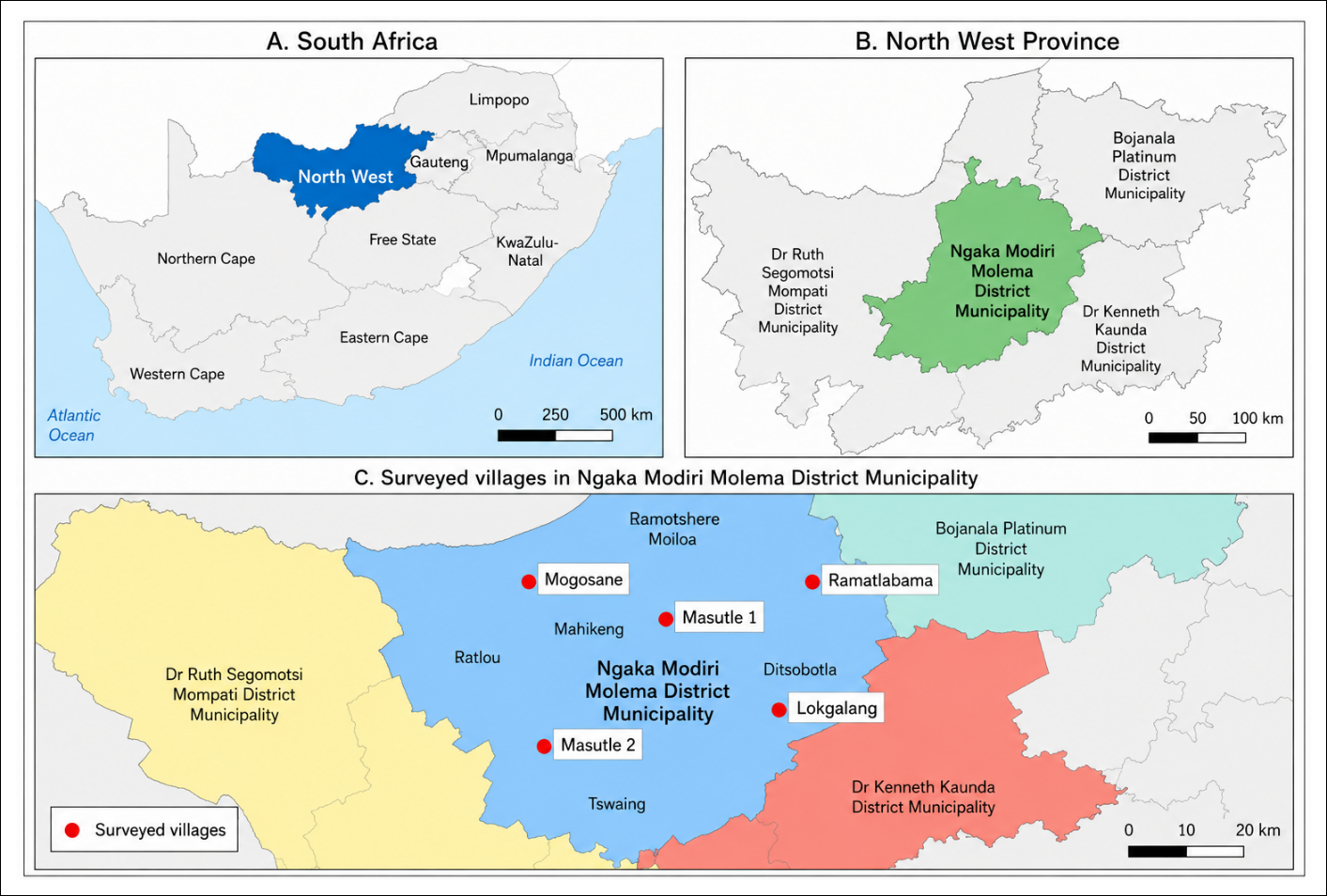
Figure 1. Location of the study area and surveyed villages in Ngaka Modiri Molema District Municipality, North West Province, South Africa. (A) Location of North West Province within South Africa; (B) location of Ngaka Modiri Molema District Municipality within North West Province; and (C) locations of the surveyed villages (Mogosane, Masutle 1, Masutle 2, Lokgalang, and Ramatlabama) within Ngaka Modiri Molema District Municipality
| Village | Latitude | Longitude |
|---|---|---|
| Mogosane | −25.71805 | 25.45861 |
| Masutle 1 | −25.75000 | 25.53330 |
| Masutle 2 | −25.79875 | 25.36695 |
| Lokgalang | −25.79867 | 25.57001 |
| Ramatlabama | −25.65563 | 25.56577 |
Table 1. Geographic coordinates of the surveyed villages in Ngaka Modiri Molema District Municipality, North West Province, South Africa.
| Village | Latitude | Longitude |
|---|---|---|
| Mogosane | −25.71805 | 25.45861 |
| Masutle 1 | −25.75000 | 25.53330 |
| Masutle 2 | −25.79875 | 25.36695 |
| Lokgalang | −25.79867 | 25.57001 |
| Ramatlabama | −25.65563 | 25.56577 |
Study design
An analytical cross-sectional survey design was used to assess KAP related to biosecurity and zoonotic disease prevention among small-scale livestock farmers in selected villages within and around Mafikeng. The study also evaluated antimicrobial use patterns and investigated behavioral, socioeconomic, and institutional factors associated with biosecurity-related outcomes using logistic regression within a One Health framework. Eligibility criteria were established before participant recruitment and are presented in Table 2.
| Inclusion criteria | Exclusion criteria |
|---|---|
| Small-scale farmers actively involved in livestock production at the time of the survey | Individuals who did not own or manage livestock during the study period |
| Residents of one of the selected villages | Farmers residing outside the selected villages |
| Aged ≥18 years | Farmers unavailable during the survey period after repeated visits |
| Willing to participate and able to provide written informed consent | Farmers who declined to participate |
| Involved in livestock farming for at least 12 months before the survey | |
| Able to communicate in English or the local language (Setswana) |
Table 2. Inclusion and exclusion criteria for study participants.
| Inclusion criteria | Exclusion criteria |
|---|---|
| Small-scale farmers actively involved in livestock production at the time of the survey | Individuals who did not own or manage livestock during the study period |
| Residents of one of the selected villages | Farmers residing outside the selected villages |
| Aged ≥18 years | Farmers unavailable during the survey period after repeated visits |
| Willing to participate and able to provide written informed consent | Farmers who declined to participate |
| Involved in livestock farming for at least 12 months before the survey | |
| Able to communicate in English or the local language (Setswana) |
Study population and sampling
The study population comprised small-scale livestock farmers residing in Mogosane, Masutle 1, Masutle 2, Lokgalang, and Ramatlabama. Participants were recruited using purposive non-probability sampling because a comprehensive sampling frame of small-scale livestock farmers was unavailable. Local animal health technicians and community leaders familiar with livestock-keeping households helped identify potentially eligible participants.
Farmers who owned or managed cattle, goats, sheep, or poultry were recruited from each village where available to capture variation in livestock production systems. The team approached eligible farmers and invited them to participate until recruitment was complete. Because probability-based sampling and proportional allocation across villages were not feasible, the sampling strategy was intended to capture a range of livestock production settings rather than provide a statistically representative sample of all small-scale livestock farmers in the district.
Sample size calculation
The intended sample size was calculated using Cochran's formula for cross-sectional studies:
Formula
where n represents the required sample size, Z is the standard normal value corresponding to a 95% confidence level (1.96), P is the assumed proportion of farmers with adequate KAP, and d is the desired margin of error. Because no previous estimate of adequate KAP was available for the study population, P was set at 0.50 to maximize variance, and d was set at 0.05. Using the initial Cochran's formula, the estimated sample size was 384. However, 192 was obtained by applying a finite population correction using:
Where: N=384
The manuscript reports an initial calculated sample size of approximately 192.3 farmers. After allowing for nonresponse and incomplete questionnaires, the target was set at 200 farmers. Of the 200 farmers approached, 151 completed the survey and provided written informed consent, corresponding to a response rate of 75.5%.
Data collection
Data were collected through face-to-face interviews conducted between December 2025 and February 2026 using a structured questionnaire. The questionnaire was administered in English and verbally translated into Setswana when required according to the participant's preferred language.
The questionnaire collected information on biosecurity and zoonotic disease knowledge; attitudes toward biosecurity; current biosecurity practices; perceived barriers to implementation; antimicrobial use patterns; annual expenditure on antimicrobials; sources of funding for animal health care; access to veterinary services; livestock-management practices; and socioeconomic characteristics. These variables were included to characterize potential behavioral, economic, and institutional factors associated with biosecurity implementation and antimicrobial use practices in resource-constrained livestock households.
Questionnaire development and administration
The questionnaire comprised four principal domains: knowledge of biosecurity and zoonotic diseases, attitudes toward biosecurity measures, current biosecurity practices, and perceived barriers to biosecurity implementation. Additional items assessed antimicrobial use, access to veterinary services, livestock husbandry, and socioeconomic characteristics.
The questionnaire was developed by reviewing published literature on farm biosecurity, zoonotic disease awareness, antimicrobial use, and KAP among livestock farmers, and it was adapted to the local farming context [28–30]. The research team, including animal health personnel, reviewed the questionnaire for clarity, relevance, and consistency with the study objectives. The complete questionnaire is provided as Supplementary Material 1. Formal pilot testing and internal-consistency assessment using Cronbach's alpha were not conducted.
The questionnaire included both closed- and open-ended questions. A qualified research veterinarian and animal health technicians conducted the interviews. Before data collection, interviewers received training on the study objectives, ethical requirements, participant interaction, questionnaire administration, and standardized interview procedures to improve consistency across interviews.
Composite score construction and outcome classification
Responses to questionnaire items included in the composite domains were dichotomized as Yes = 1 and No = 0. Item scores were summed within each domain to generate composite scores for knowledge of biosecurity and zoonotic diseases, attitudes toward biosecurity practices, current biosecurity practices, and perceived barriers to biosecurity adoption. Higher scores represented greater knowledge, more favorable attitudes, better implementation of biosecurity practices, or greater perceived barriers, depending on the domain. Dichotomization of the domain-specific mean score was used. Participants who did score above the mean were coded as 1, and those who did not score above the mean were coded as 0. The mean knowledge, attitudes, and current biosecurity practice scores were 3.23, 3.99, and 2.27, respectively. These composite scores were integer-valued sums of binary items, so no participant could end up at these non-integer mean cut-offs. The mean score for perceived barriers was 5.00; those scoring 5 or higher were assigned a score of 1 and represented high perceived barriers, while those scoring below the mean represented low perceived barriers.
Because no validated universal cutoff values were available for classifying KAP outcomes among small-scale livestock farmers in this study setting, the mean composite score for each domain was used as the classification threshold. Participants scoring above the corresponding mean were classified as having adequate knowledge, positive attitudes, adequate biosecurity practices, or high perceived barriers and were coded as 1. Participants scoring below the mean were classified as having inadequate knowledge, negative attitudes, inadequate biosecurity practices, or low perceived barriers and were coded as 0. These binary composite outcomes were subsequently used as dependent variables in logistic regression analyses.
Operational definitions of economic variables
Annual expenditure on antimicrobials was categorized into two levels. Low expenditure was defined as annual spending of R2,500–R10,000, whereas high expenditure was defined as annual spending of >R10,000. During the data collection period, no participants reported annual antimicrobial expenditure below R2,500 or zero expenditure.
Sources of funding for animal health care were classified as (1) livestock sales used to purchase medicines, (2) pension funds, (3) informal income or external support, (4) formal employment income or salary, and (5) social grants from the South African Social Security Agency.
Statistical analysis
Data were transcribed, cleaned, and analyzed using IBM SPSS Statistics version 30.0 (IBM Corp., Armonk, NY, USA). Analyses were conducted using available data from completed questionnaires, and no imputation of missing data was performed. Descriptive statistics were used to summarize respondent characteristics and study variables and are presented as frequencies, percentages, means, medians, or modes, as appropriate.
Bivariate logistic regression was used to assess associations between candidate explanatory variables, including sociodemographic characteristics, knowledge, attitudes, livestock-management practices, and institutional factors, and the composite outcome variables for knowledge, attitudes, current biosecurity practices, and perceived barriers. Variables with p ≤ 0.20 in bivariate analyses were considered for inclusion in the multivariable logistic regression models. Categorical variables were coded as binary or indicator variables, as appropriate, and reference categories were selected based on the analytical structure and data distribution.
Eligible variables were entered simultaneously into the multivariable logistic regression models using the enter method to identify factors independently associated with each outcome. Associations are presented as adjusted odds ratios (AORs) with 95% confidence intervals (CIs). A multivariable model was initially considered for the attitude outcome; however, the model did not converge because of quasi-complete separation and limited variability in some predictors. Therefore, only bivariate logistic regression results were interpreted for the attitude domain.
Model performance was evaluated using the omnibus test of model coefficients, the Hosmer–Lemeshow goodness-of-fit test, Cox and Snell R², Nagelkerke R², and classification measures, including overall accuracy, sensitivity, and specificity.
For the antimicrobial expenditure analysis, annual expenditure was dichotomized into low and high categories and recoded as required for analysis. Binary logistic regression was used to assess factors associated with higher annual antimicrobial expenditure. Meanwhile, antimicrobial classes and other antimicrobial use patterns were descriptively summarized and were not modelled as dependent variables.
All statistical tests were two-tailed, and p < 0.05 was considered statistically significant. No adjustment for multiple comparisons was applied because the analyses were exploratory.
RESULTS
A total of 200 small-scale livestock farmers were approached, of whom 151 met the eligibility criteria, provided informed consent, and completed the survey, yielding a response rate of 75.5% (Figure 2). The study evaluated KAP related to biosecurity and zoonotic disease prevention, barriers to biosecurity implementation, access to veterinary services, and antimicrobial use patterns among farmers in Ngaka Modiri Molema District Municipality, North West Province, South Africa.
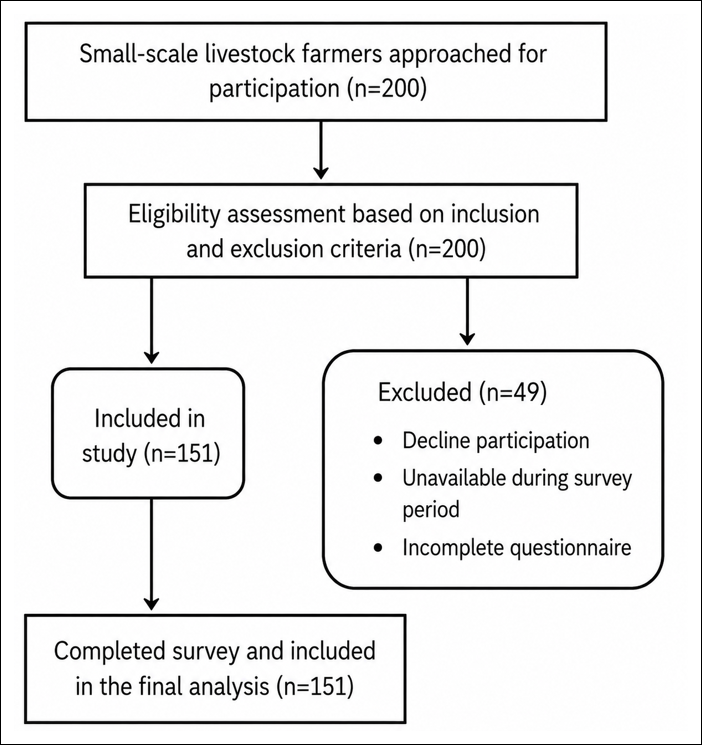
Figure 2. Flow diagram of participant recruitment, eligibility assessment, exclusions, and final enrollment of small-scale livestock farmers in Ngaka Modiri Molema District Municipality, North West Province, South Africa. Of the 200 farmers approached, 151 met the eligibility criteria, provided informed consent, and completed the survey, corresponding to a response rate of 75.5%.
Sociodemographic and educational characteristics of respondents
The sociodemographic characteristics of the 151 respondents are presented in Table 3. The mean age was 55.4 ± 10.4 years. Of the respondents, 86 (57.0%) were male, and 65 (43.0%) were female. The largest age group comprised respondents aged 26–50 years (52/151, 34.4%), followed by those aged 56–62 years (38/151, 25.2%), ≥62 years (36/151, 23.8%), and 51–55 years (25/151, 16.6%).
Secondary education was the most frequently reported educational level (71/151, 47.0%), followed by tertiary education (32/151, 21.2%), primary education (26/151, 17.2%), and no formal education (22/151, 14.6%).
Cattle were the most frequently reported livestock species (128/151, 84.8%), followed by goats (105/151, 69.5%), poultry (93/151, 61.6%), and sheep (60/151, 39.7%). Most respondents were full-time farmers (113/151, 74.8%), and 47 (31.1%) reported additional income-generating activities. Children participated in farming activities in 98 (64.9%) households. Most respondents described their livelihood status as moderate (101/151, 66.9%), followed by good (39/151, 25.8%) and poor (11/151, 7.3%) (Table 3).
| Variable | Category | Frequency (n) | Percentage |
|---|---|---|---|
| Age (years) | Mean ± SD | 55.4 ± 10.4 | – |
| Age group | 26–50 years | 52 | 34.4 |
| 51–55 years | 25 | 16.6 | |
| 56–62 years | 38 | 25.2 | |
| ≥62 years | 36 | 23.8 | |
| Gender | Female | 65 | 43.0 |
| Male | 86 | 57.0 | |
| Education level | No formal education | 22 | 14.6 |
| Primary education | 26 | 17.2 | |
| Secondary education | 71 | 47.0 | |
| Tertiary education | 32 | 21.2 | |
| Livestock typeᵃ | Cattle | 128 | 84.8 |
| Goats | 105 | 69.5 | |
| Poultry | 93 | 61.6 | |
| Sheep | 60 | 39.7 | |
| Farming status | Full-time farmer | 113 | 74.8 |
| Additional livelihood activities | Other income-generating activities | 47 | 31.1 |
| Children involved in farming | Children involved in farming | 98 | 64.9 |
| Livelihood status | Poor | 11 | 7.3 |
| Moderate | 101 | 66.9 | |
| Good | 39 | 25.8 |
Table 3. Sociodemographic and educational characteristics of participating farmers (n = 151).
| Variable | Category | Frequency (n) | Percentage |
|---|---|---|---|
| Age (years) | Mean ± SD | 55.4 ± 10.4 | – |
| Age group | 26–50 years | 52 | 34.4 |
| 51–55 years | 25 | 16.6 | |
| 56–62 years | 38 | 25.2 | |
| ≥62 years | 36 | 23.8 | |
| Gender | Female | 65 | 43.0 |
| Male | 86 | 57.0 | |
| Education level | No formal education | 22 | 14.6 |
| Primary education | 26 | 17.2 | |
| Secondary education | 71 | 47.0 | |
| Tertiary education | 32 | 21.2 | |
| Livestock typeᵃ | Cattle | 128 | 84.8 |
| Goats | 105 | 69.5 | |
| Poultry | 93 | 61.6 | |
| Sheep | 60 | 39.7 | |
| Farming status | Full-time farmer | 113 | 74.8 |
| Additional livelihood activities | Other income-generating activities | 47 | 31.1 |
| Children involved in farming | Children involved in farming | 98 | 64.9 |
| Livelihood status | Poor | 11 | 7.3 |
| Moderate | 101 | 66.9 | |
| Good | 39 | 25.8 |
ᵃParticipants could report more than one livestock type; therefore, percentages do not total 100%. SD = Standard deviation.
Knowledge of biosecurity and zoonotic diseases among farmers
Figure 3 summarizes respondents’ awareness of zoonotic diseases and their reported sources of animal health information. Awareness varied considerably among the selected zoonotic diseases. Anthrax had the lowest reported awareness, with 25 (16.6%) respondents indicating that they were aware of the disease. Awareness was reported by 51 (33.8%) respondents for brucellosis, 64 (42.4%) for bovine tuberculosis, and 75 (49.7%) for rabies.
Animal health information was obtained through both informal and formal sources. Family members or friends were reported as a source of information by 86 (57.0%) respondents. Veterinary officers were reported by 47 (31.1%) respondents, community health workers by 40 (26.5%), and media sources by 34 (22.5%). These findings demonstrate variation in both zoonotic disease awareness and access to different sources of animal health information.
Attitudes toward biosecurity practices
Respondents generally expressed favorable perceptions toward the importance of livestock disease control and biosecurity (Table 4). A total of 125 (82.8%) respondents believed that controlling livestock diseases at the farm level could help protect human health, and 118 (78.1%) considered biosecurity measures, including quarantine, vaccination, and appropriate waste disposal, important components of farm management.
Substantial implementation challenges were also reported. Respondents identified lack of veterinary support as a challenge by 114 (75.5%), high implementation costs by 113 (74.8%), and lack of knowledge by 105 (69.5%). Cultural or traditional beliefs were reported as an implementation challenge by 27 (17.9%) respondents.
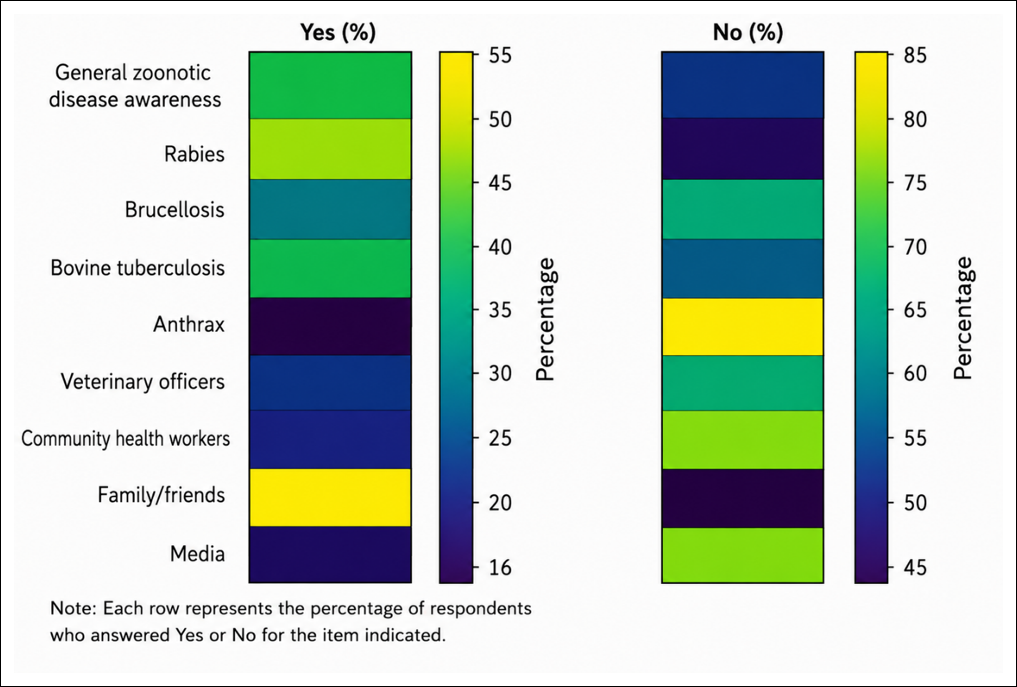
Figure 3. Heatmap showing responses of small-scale livestock farmers in Ngaka Modiri Molema District Municipality, North West Province, South Africa (n = 151), regarding awareness of selected zoonotic diseases and sources of animal health information. The heatmap presents the percentages of respondents reporting Yes or No for each item. Sources of animal health information included family members or friends, veterinary officers, community health workers, and media. Concerning animal health information, participants could report more than one source of information; therefore, percentages across information sources do not total 100%
| Question | Yes, n (%) | No, n (%) |
|---|---|---|
| Do you believe that controlling diseases in livestock at the farm level can help protect human health? | 125 (82.8) | 26 (17.2) |
| Do you consider biosecurity measures (quarantine, vaccination, and proper waste disposal) important on your farm? | 118 (78.1) | 33 (21.9) |
| Is lack of knowledge a challenge to implementing biosecurity measures on your farm? | 105 (69.5) | 46 (30.5) |
| Is the high cost of implementation a challenge to adopting biosecurity measures on your farm? | 113 (74.8) | 38 (25.2) |
| Is lack of veterinary support a challenge to implementing biosecurity measures on your farm? | 114 (75.5) | 37 (24.5) |
| Are cultural or traditional beliefs a challenge to implementing biosecurity measures on your farm? | 27 (17.9) | 124 (82.1) |
Table 4. Attitudes toward biosecurity measures and perceived barriers to biosecurity implementation among small-scale livestock farmers (n = 151).
| Question | Yes, n (%) | No, n (%) |
|---|---|---|
| Do you believe that controlling diseases in livestock at the farm level can help protect human health? | 125 (82.8) | 26 (17.2) |
| Do you consider biosecurity measures (quarantine, vaccination, and proper waste disposal) important on your farm? | 118 (78.1) | 33 (21.9) |
| Is lack of knowledge a challenge to implementing biosecurity measures on your farm? | 105 (69.5) | 46 (30.5) |
| Is the high cost of implementation a challenge to adopting biosecurity measures on your farm? | 113 (74.8) | 38 (25.2) |
| Is lack of veterinary support a challenge to implementing biosecurity measures on your farm? | 114 (75.5) | 37 (24.5) |
| Are cultural or traditional beliefs a challenge to implementing biosecurity measures on your farm? | 27 (17.9) | 124 (82.1) |
Current biosecurity practices among small-scale farmers
Implementation of individual biosecurity measures varied substantially among respondents (Figure 4). Regular vaccination was the most frequently reported practice, with 90 (59.6%) respondents indicating that they routinely vaccinated their livestock. Animal movement control was reported by 60 (39.7%) respondents, whereas 50 (33.1%) reported disposal of dead animals on the farm. Awareness of the effects of zoonotic diseases on human health and the economy was reported by 47 (31.1%) respondents.
Several key biosecurity practices showed comparatively low adoption. Quarantine of newly introduced or sick animals was reported by 25 (16.6%) respondents, whereas proper waste and carcass disposal was reported by 37 (24.5%). Only 22 (14.6%) respondents reported contacting an animal health technician or veterinarian when managing sick animals, whereas 129 (85.4%) reported managing sick animals without such professional assistance. Regular veterinary visits or consultations were reported by 15 (9.9%) respondents, compared with 136 (90.1%) who did not report regular veterinary access.
In the subsequent multivariable analysis, veterinary visits or consultations were strongly associated with biosecurity practices (AOR = 12.80; 95% CI: 2.35–69.80; p = 0.003).
Barriers to biosecurity adoption and implementation
Perceived barriers to biosecurity adoption and reported support needs are presented in Table 5. Lack of infrastructure was the most frequently reported barrier (111/151, 73.5%), followed by financial constraints (107/151, 70.9%), lack of awareness (98/151, 64.9%), and cultural practices (42/151, 27.8%).
Regarding potential support mechanisms, 126 (83.4%) respondents indicated that improved access to veterinary services would facilitate implementation of biosecurity measures, and 115 (76.2%) identified training on disease control as beneficial. Community support programs were endorsed by 84 (55.6%) respondents, whereas 74 (49.0%) indicated that financial assistance would facilitate improved biosecurity implementation.
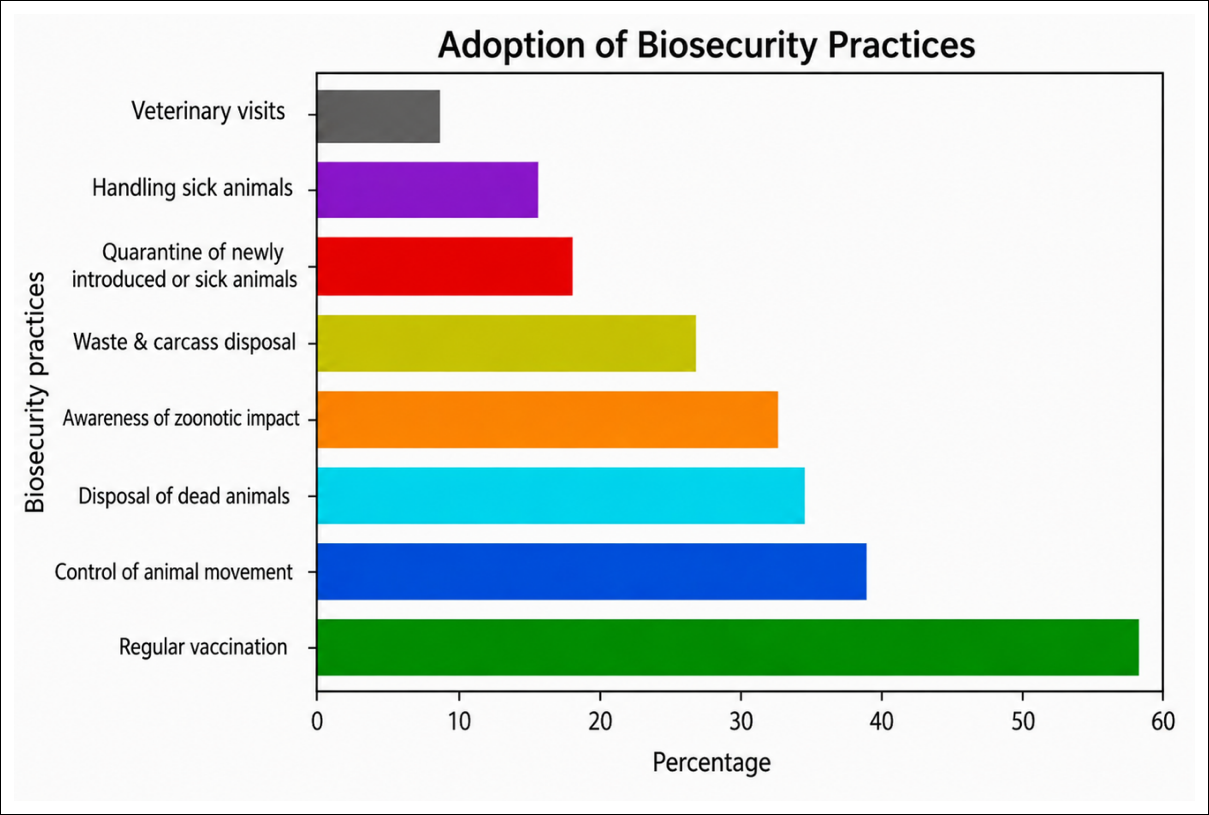
Figure 4. Uptake of selected biosecurity practices among small-scale livestock farmers (n = 151) in Ngaka Modiri Molema District Municipality, North West Province, South Africa. Regular vaccination was reported by 59.6% of respondents and animal movement control by 39.7%, whereas regular veterinary consultation (9.9%), professional assistance in managing sick animals (14.6%), and quarantine (16.6%) were among the least frequently reported practices. Percentages were calculated using the total number of respondents (n = 151).
| Question | Yes, n (%) | No, n (%) |
|---|---|---|
| Is financial constraint a barrier to adopting biosecurity measures? | 107 (70.9) | 44 (29.1) |
| Is lack of awareness a barrier to adopting biosecurity measures? | 98 (64.9) | 53 (35.1) |
| Are cultural practices a barrier to adopting biosecurity measures? | 42 (27.8) | 109 (72.2) |
| Is lack of infrastructure a barrier to adopting biosecurity measures? | 111 (73.5) | 40 (26.5) |
| Would improve access to veterinary services help you implement better biosecurity measures? | 126 (83.4) | 25 (16.6) |
| Would training on disease control help improve biosecurity implementation? | 115 (76.2) | 36 (23.8) |
| Would financial assistance help improve biosecurity implementation? | 74 (49.0) | 77 (51.0) |
| Would community support programs help improve biosecurity implementation? | 84 (55.6) | 67 (44.4) |
Table 5. Perceived barriers to biosecurity adoption and support needs among small-scale livestock farmers (n = 151).
| Question | Yes, n (%) | No, n (%) |
|---|---|---|
| Is financial constraint a barrier to adopting biosecurity measures? | 107 (70.9) | 44 (29.1) |
| Is lack of awareness a barrier to adopting biosecurity measures? | 98 (64.9) | 53 (35.1) |
| Are cultural practices a barrier to adopting biosecurity measures? | 42 (27.8) | 109 (72.2) |
| Is lack of infrastructure a barrier to adopting biosecurity measures? | 111 (73.5) | 40 (26.5) |
| Would improve access to veterinary services help you implement better biosecurity measures? | 126 (83.4) | 25 (16.6) |
| Would training on disease control help improve biosecurity implementation? | 115 (76.2) | 36 (23.8) |
| Would financial assistance help improve biosecurity implementation? | 74 (49.0) | 77 (51.0) |
| Would community support programs help improve biosecurity implementation? | 84 (55.6) | 67 (44.4) |
Factors associated with knowledge of biosecurity and zoonotic diseases
Bivariate logistic regression identified several factors associated with knowledge of biosecurity and zoonotic diseases (Table 6). Age group was not significantly associated with knowledge (all p > 0.05). Among the education categories, secondary education was significantly associated with greater odds of knowledge (odds ratio [OR] = 2.03; 95% CI: 1.06–3.89; p = 0.034), whereas the remaining education categories were not significantly associated with the outcome.
General awareness of zoonotic diseases was strongly associated with knowledge (OR = 17.33; 95% CI: 7.70–39.04; p < 0.001). Awareness of individual zoonotic diseases was also significantly associated with knowledge, including rabies (OR = 14.67; 95% CI: 6.58–32.68; p < 0.001), brucellosis (OR = 17.02; 95% CI: 7.04–41.17; p < 0.001), bovine tuberculosis (OR = 2.92; 95% CI: 1.50–5.71; p = 0.002), and anthrax (OR = 4.04; 95% CI: 1.57–10.38; p = 0.004).
Sources of animal health information were also associated with knowledge. Respondents obtaining information from veterinary officers (OR = 3.66; 95% CI: 1.77–7.57; p < 0.001), family members or friends (OR = 2.41; 95% CI: 1.23–4.71; p = 0.010), or media (OR = 4.13; 95% CI: 1.81–9.45; p < 0.001) had significantly greater odds of knowledge. Information obtained from community health workers was not significantly associated with knowledge (OR = 2.06; 95% CI: 0.99–4.29; p = 0.053).
| Variable | B | SE | Exp(B) | OR (95% CI) | p-value |
|---|---|---|---|---|---|
| Age group | |||||
| 26–50 years | −0.13 | 0.35 | 0.88 | 0.88 (0.45–1.73) | 0.712 |
| 51–55 years | 0.76 | 0.45 | 2.14 | 2.14 (0.89–5.12) | 0.089 |
| 56–62 years | 0.30 | 0.38 | 1.35 | 1.35 (0.65–2.83) | 0.420 |
| ≥62 years | −0.77 | 0.41 | 0.46 | 0.46 (0.21–1.03) | 0.059 |
| Education level | |||||
| Primary education | −0.92 | 0.48 | 0.40 | 0.40 (0.16–1.02) | 0.054 |
| Secondary education | 0.71 | 0.33 | 2.03 | 2.03 (1.06–3.89) | 0.034 |
| Tertiary education | −0.19 | 0.40 | 0.82 | 0.82 (0.37–1.82) | 0.631 |
| No formal education | −0.17 | 0.47 | 0.85 | 0.85 (0.34–2.12) | 0.724 |
| Zoonotic disease awareness | |||||
| Aware of zoonotic diseases | 2.85 | 0.41 | 17.33 | 17.33 (7.70–39.04) | <0.001 |
| Rabies awareness | 2.69 | 0.41 | 14.67 | 14.67 (6.58–32.68) | <0.001 |
| Brucellosis awareness | 2.83 | 0.45 | 17.02 | 17.02 (7.04–41.17) | <0.001 |
| Bovine tuberculosis awareness | 1.07 | 0.34 | 2.92 | 2.92 (1.50–5.71) | 0.002 |
| Anthrax awareness | 1.40 | 0.48 | 4.04 | 4.04 (1.57–10.38) | 0.004 |
| Source of information | |||||
| Veterinary officers | 1.30 | 0.37 | 3.66 | 3.66 (1.77–7.57) | <0.001 |
| Community health workers | 0.72 | 0.37 | 2.06 | 2.06 (0.99–4.29) | 0.053 |
| Family or friends | 0.88 | 0.34 | 2.41 | 2.41 (1.23–4.71) | 0.010 |
| Media (radio/television) | 1.42 | 0.42 | 4.13 | 4.13 (1.81–9.45) | <0.001 |
Table 6. Bivariate logistic regression analysis of factors associated with knowledge of biosecurity and zoonotic diseases among small-scale livestock farmers (n = 151).
| Variable | B | SE | Exp(B) | OR (95% CI) | p-value |
|---|---|---|---|---|---|
| Age group | |||||
| 26–50 years | −0.13 | 0.35 | 0.88 | 0.88 (0.45–1.73) | 0.712 |
| 51–55 years | 0.76 | 0.45 | 2.14 | 2.14 (0.89–5.12) | 0.089 |
| 56–62 years | 0.30 | 0.38 | 1.35 | 1.35 (0.65–2.83) | 0.420 |
| ≥62 years | −0.77 | 0.41 | 0.46 | 0.46 (0.21–1.03) | 0.059 |
| Education level | |||||
| Primary education | −0.92 | 0.48 | 0.40 | 0.40 (0.16–1.02) | 0.054 |
| Secondary education | 0.71 | 0.33 | 2.03 | 2.03 (1.06–3.89) | 0.034 |
| Tertiary education | −0.19 | 0.40 | 0.82 | 0.82 (0.37–1.82) | 0.631 |
| No formal education | −0.17 | 0.47 | 0.85 | 0.85 (0.34–2.12) | 0.724 |
| Zoonotic disease awareness | |||||
| Aware of zoonotic diseases | 2.85 | 0.41 | 17.33 | 17.33 (7.70–39.04) | <0.001 |
| Rabies awareness | 2.69 | 0.41 | 14.67 | 14.67 (6.58–32.68) | <0.001 |
| Brucellosis awareness | 2.83 | 0.45 | 17.02 | 17.02 (7.04–41.17) | <0.001 |
| Bovine tuberculosis awareness | 1.07 | 0.34 | 2.92 | 2.92 (1.50–5.71) | 0.002 |
| Anthrax awareness | 1.40 | 0.48 | 4.04 | 4.04 (1.57–10.38) | 0.004 |
| Source of information | |||||
| Veterinary officers | 1.30 | 0.37 | 3.66 | 3.66 (1.77–7.57) | <0.001 |
| Community health workers | 0.72 | 0.37 | 2.06 | 2.06 (0.99–4.29) | 0.053 |
| Family or friends | 0.88 | 0.34 | 2.41 | 2.41 (1.23–4.71) | 0.010 |
| Media (radio/television) | 1.42 | 0.42 | 4.13 | 4.13 (1.81–9.45) | <0.001 |
B = Regression coefficient; Exp(B) = Exponentiated regression coefficient; SE = Standard error. For binary variables, ORs compare respondents answering “Yes” (1) with those answering “No”(0). Age-group and education-level categories were analyzed as separate binary indicator variables; therefore, each category was compared with respondents not belonging to that category, and no single category served as the reference group. Variables with p ≤ 0.20 in the bivariate analysis were considered for inclusion in the multivariable logistic regression model. Statistical significance was set at p < 0.05.
Factors associated with attitudes toward biosecurity practices
Bivariate logistic regression analysis identified factors associated with attitudes toward biosecurity practices (Table 7). Age group and education level were not significantly associated with attitudes (all p > 0.05). Cultural or traditional beliefs were also not significantly associated with the attitude outcome (OR = 1.12; 95% CI: 0.44–2.89; p = 0.809).
Respondents who believed that controlling livestock diseases at the farm level protects human health had greater odds of a positive attitude toward biosecurity (OR = 4.04; 95% CI: 1.68–9.73; p = 0.002). Considering biosecurity measures important was similarly associated with positive attitudes (OR = 6.71; 95% CI: 2.90–15.52; p < 0.001). Reporting lack of knowledge (OR = 7.23; 95% CI: 3.28–15.92; p < 0.001), high implementation costs (OR = 7.59; 95% CI: 3.35–17.16; p < 0.001), and lack of veterinary support (OR = 9.85; 95% CI: 4.24–22.85; p < 0.001) was also significantly associated with the attitude outcome.
Factors associated with current biosecurity practices
Bivariate logistic regression analysis identified several factors associated with current biosecurity practices (Table 8). Respondents in the 26–50-year age group had lower odds of adequate biosecurity practices (OR = 0.47; 95% CI: 0.23–0.96; p = 0.038). The remaining age and education categories were not significantly associated with the outcome.
Several farm management measures were significantly associated with the composite biosecurity-practice outcome, including regular vaccination (OR = 2.21; 95% CI: 1.12–4.37; p = 0.023), quarantine of new or sick animals (OR = 7.46; 95% CI: 2.62–21.22; p < 0.001), control of animal movement (OR = 4.90; 95% CI: 2.43–9.90; p < 0.001), and proper waste and carcass disposal (OR = 5.62; 95% CI: 2.46–12.82; p < 0.001).
Veterinary visits or consultations were associated with greater odds of adequate biosecurity practices (OR = 10.83; 95% CI: 2.35–49.96; p = 0.002). Proper handling of sick animals (OR = 4.50; 95% CI: 1.65–12.28; p = 0.003), proper disposal of dead animals (OR = 5.03; 95% CI: 2.42–10.45; p < 0.001), and awareness of the impact of zoonotic diseases (OR = 12.67; 95% CI: 5.41–29.68; p < 0.001) were also significantly associated with the biosecurity-practice outcome.
| Variable | B | SE | OR [Exp(B)] | 95% CI | p-value |
|---|---|---|---|---|---|
| Age group | |||||
| 26–50 years | −0.36 | 0.37 | 0.70 | 0.33–1.45 | 0.333 |
| 51–55 years | 0.24 | 0.51 | 1.27 | 0.47–3.43 | 0.642 |
| 56–62 years | 0.48 | 0.45 | 1.61 | 0.67–3.88 | 0.285 |
| > 62 years | −0.18 | 0.43 | 0.84 | 0.37–1.91 | 0.674 |
| Education level | |||||
| Primary education | 0.30 | 0.51 | 1.35 | 0.50–3.63 | 0.554 |
| Secondary education | 0.23 | 0.37 | 1.26 | 0.62–2.59 | 0.525 |
| Tertiary education | −0.40 | 0.43 | 0.67 | 0.29–1.55 | 0.353 |
| No formal education (Ref) | −0.22 | 0.49 | 0.80 | 0.30–2.12 | 0.651 |
Table 7. Bivariate logistic regression analysis of factors associated with attitudes toward biosecurity practices among small-scale livestock farmers (n = 151).
| Variable | B | SE | OR [Exp(B)] | 95% CI | p-value |
|---|---|---|---|---|---|
| Age group | |||||
| 26–50 years | −0.36 | 0.37 | 0.70 | 0.33–1.45 | 0.333 |
| 51–55 years | 0.24 | 0.51 | 1.27 | 0.47–3.43 | 0.642 |
| 56–62 years | 0.48 | 0.45 | 1.61 | 0.67–3.88 | 0.285 |
| > 62 years | −0.18 | 0.43 | 0.84 | 0.37–1.91 | 0.674 |
| Education level | |||||
| Primary education | 0.30 | 0.51 | 1.35 | 0.50–3.63 | 0.554 |
| Secondary education | 0.23 | 0.37 | 1.26 | 0.62–2.59 | 0.525 |
| Tertiary education | −0.40 | 0.43 | 0.67 | 0.29–1.55 | 0.353 |
| No formal education (Ref) | −0.22 | 0.49 | 0.80 | 0.30–2.12 | 0.651 |
B = Regression coefficient; Exp(B) = Exponentiated regression coefficient; SE = Standard error; CI = Confidence interval. For binary variables, ORs compare respondents coded “Yes” (1) with those coded “No” (0). Age-group and education-level categories were analyzed as separate binary indicator variables; therefore, each category was compared with respondents not belonging to that category, and no single category served as the reference group Statistical significance was set at p < 0.05.
| Variable | B | SE | Exp(B) | 95% CI | p-value |
|---|---|---|---|---|---|
| Age group | |||||
| 26–50 years | −0.75 | 0.36 | 0.47 | 0.23–0.96 | 0.038 |
| 51–55 years | 0.86 | 0.45 | 2.36 | 0.98–5.66 | 0.055 |
| 56–62 years | 0.27 | 0.38 | 1.31 | 0.63–2.75 | 0.473 |
| >62 years | −0.04 | 0.39 | 0.96 | 0.45–2.06 | 0.920 |
| Education level | |||||
| Primary | 0.37 | 0.43 | 1.45 | 0.62–3.39 | 0.389 |
| Secondary | 0.32 | 0.33 | 1.37 | 0.72–2.62 | 0.338 |
| Tertiary | −0.60 | 0.42 | 0.55 | 0.24–1.26 | 0.154 |
| No formal education | −0.30 | 0.48 | 0.75 | 0.29–1.90 | 0.537 |
Table 8. Bivariate logistic regression analysis of factors associated with current biosecurity practices among small-scale livestock farmers (n = 151).
| Variable | B | SE | Exp(B) | 95% CI | p-value |
|---|---|---|---|---|---|
| Age group | |||||
| 26–50 years | −0.75 | 0.36 | 0.47 | 0.23–0.96 | 0.038 |
| 51–55 years | 0.86 | 0.45 | 2.36 | 0.98–5.66 | 0.055 |
| 56–62 years | 0.27 | 0.38 | 1.31 | 0.63–2.75 | 0.473 |
| >62 years | −0.04 | 0.39 | 0.96 | 0.45–2.06 | 0.920 |
| Education level | |||||
| Primary | 0.37 | 0.43 | 1.45 | 0.62–3.39 | 0.389 |
| Secondary | 0.32 | 0.33 | 1.37 | 0.72–2.62 | 0.338 |
| Tertiary | −0.60 | 0.42 | 0.55 | 0.24–1.26 | 0.154 |
| No formal education | −0.30 | 0.48 | 0.75 | 0.29–1.90 | 0.537 |
B = Regression coefficient; Exp(B) = Exponentiated regression coefficient; SE = Standard error; CI = Confidence interval. Statistical significance was set at p < 0.05.
Factors associated with barriers to biosecurity adoption
Bivariate logistic regression analysis identified several factors associated with the composite barrier outcome (Table 9). Age and education were not significantly associated with perceived barriers (all p > 0.05). Financial constraints were associated with greater odds of reporting high barriers (OR = 2.45; 95% CI: 1.19–5.06; p = 0.015). Cultural practices (OR = 7.76; 95% CI: 2.59–23.24; p < 0.001) and lack of infrastructure (OR = 3.65; 95% CI: 1.72–7.76; p < 0.001) were also significantly associated with the barrier outcome. Lack of awareness did not reach statistical significance (OR = 1.97; 95% CI: 0.98–3.94; p = 0.055).
Respondents who indicated a need for improved access to veterinary services (OR = 5.31; 95% CI: 2.11–13.40; p < 0.001), training on disease control (OR = 5.93; 95% CI: 2.64–13.34; p < 0.001), or community support programs (OR = 9.46; 95% CI: 4.32–20.73; p < 0.001) had greater odds of reporting high barriers to biosecurity adoption. Financial assistance was not significantly associated with the barrier outcome (OR = 1.26; 95% CI: 0.64–2.46; p = 0.501).
Multivariable analysis of factors associated with KAP outcomes
Figure 5 presents the adjusted associations for knowledge of biosecurity and zoonotic diseases, current biosecurity practices, and barriers to biosecurity adoption. The reference line at AOR = 1 indicates no association; estimates above or below 1 indicate greater or lower odds of the corresponding outcome, respectively.
For knowledge of biosecurity and zoonotic diseases, awareness of zoonotic diseases was associated with substantially greater odds of adequate knowledge (AOR = 46.64; 95% CI: 13.78–157.88; p < 0.001). Several sources of animal health information were also significantly associated with adequate knowledge, including veterinary officers (AOR = 10.37; 95% CI: 3.07–35.01; p = 0.001), community health workers (AOR = 5.30; 95% CI: 1.47–19.14; p = 0.011), family members or friends (AOR = 9.48; 95% CI: 2.87–31.26; p < 0.001), and media (AOR = 5.44; 95% CI: 1.65–17.92; p = 0.004). Respondents aged 51–55 years also had greater odds of adequate knowledge (AOR = 5.54; 95% CI: 1.29–23.86; p = 0.021).
For current biosecurity practices, veterinary visits or consultations were associated with greater odds of adequate biosecurity practices (AOR = 12.80; 95% CI: 2.35–69.80; p = 0.003). Awareness of the effects of zoonotic diseases on human health and the economy was also significantly associated with adequate biosecurity practices (AOR = 14.12; 95% CI: 5.50–36.25; p < 0.001). Respondents in the youngest age category had lower odds of adequate biosecurity practices (AOR = 0.37; 95% CI: 0.14–0.97; p = 0.042). Other evaluated demographic variables, including the 51–55-year age category and tertiary education, were not significantly associated with the practice outcome.
For barriers to biosecurity adoption, several structural, socioeconomic, and support-related factors were significantly associated with the composite barrier outcome. These included community support programs (AOR = 19.54; 95% CI: 5.72–66.82; p < 0.001), cultural practices (AOR = 17.29; 95% CI: 3.69–80.90; p < 0.001), financial constraints (AOR = 15.03; 95% CI: 3.93–57.52; p < 0.001), access to veterinary services (AOR = 13.21; 95% CI: 2.91–60.09; p < 0.001), and training on disease control (AOR = 10.97; 95% CI: 3.17–37.96; p < 0.001). After adjustment, age and education were not significantly associated with the composite barrier outcome.
| Variable | B | SE | Exp(B) | 95% CI | p-value |
|---|---|---|---|---|---|
| Age group | |||||
| 26–50 years | −0.60 | 0.36 | 0.55 | 0.27–1.10 | 0.090 |
| 51–55 years | 0.39 | 0.48 | 1.48 | 0.57–3.81 | 0.417 |
| 56–62 years | −0.10 | 0.39 | 0.90 | 0.42–1.94 | 0.795 |
| >62 years | 0.62 | 0.43 | 1.86 | 0.80–4.32 | 0.149 |
| Education level | |||||
| Primary | 0.24 | 0.46 | 1.27 | 0.51–3.14 | 0.612 |
| Secondary | 0.11 | 0.34 | 1.11 | 0.57–2.18 | 0.753 |
| Tertiary | −0.63 | 0.41 | 0.53 | 0.24–1.18 | 0.119 |
| No formal education | 0.42 | 0.51 | 1.53 | 0.56–4.17 | 0.408 |
| Perceived barriers | |||||
| Financial constraints | 0.90 | 0.37 | 2.45 | 1.19–5.06 | 0.015 |
| Lack of awareness | 0.68 | 0.35 | 1.97 | 0.98–3.94 | 0.055 |
| Cultural practices | 2.05 | 0.56 | 7.76 | 2.59–23.24 | <0.001 |
| Lack of infrastructure | 1.30 | 0.39 | 3.65 | 1.72–7.76 | <0.001 |
| Support factors | |||||
| Access to veterinary services | 1.67 | 0.47 | 5.31 | 2.11–13.40 | <0.001 |
| Training on disease control | 1.78 | 0.41 | 5.93 | 2.64–13.34 | <0.001 |
| Financial assistance | 0.23 | 0.34 | 1.26 | 0.64–2.46 | 0.501 |
| Community support programs | 2.25 | 0.40 | 9.46 | 4.32–20.73 | <0.001 |
Table 9. Bivariate logistic regression analysis of factors associated with barriers to biosecurity adoption among small-scale livestock farmers (n = 151).
| Variable | B | SE | Exp(B) | 95% CI | p-value |
|---|---|---|---|---|---|
| Age group | |||||
| 26–50 years | −0.60 | 0.36 | 0.55 | 0.27–1.10 | 0.090 |
| 51–55 years | 0.39 | 0.48 | 1.48 | 0.57–3.81 | 0.417 |
| 56–62 years | −0.10 | 0.39 | 0.90 | 0.42–1.94 | 0.795 |
| >62 years | 0.62 | 0.43 | 1.86 | 0.80–4.32 | 0.149 |
| Education level | |||||
| Primary | 0.24 | 0.46 | 1.27 | 0.51–3.14 | 0.612 |
| Secondary | 0.11 | 0.34 | 1.11 | 0.57–2.18 | 0.753 |
| Tertiary | −0.63 | 0.41 | 0.53 | 0.24–1.18 | 0.119 |
| No formal education | 0.42 | 0.51 | 1.53 | 0.56–4.17 | 0.408 |
| Perceived barriers | |||||
| Financial constraints | 0.90 | 0.37 | 2.45 | 1.19–5.06 | 0.015 |
| Lack of awareness | 0.68 | 0.35 | 1.97 | 0.98–3.94 | 0.055 |
| Cultural practices | 2.05 | 0.56 | 7.76 | 2.59–23.24 | <0.001 |
| Lack of infrastructure | 1.30 | 0.39 | 3.65 | 1.72–7.76 | <0.001 |
| Support factors | |||||
| Access to veterinary services | 1.67 | 0.47 | 5.31 | 2.11–13.40 | <0.001 |
| Training on disease control | 1.78 | 0.41 | 5.93 | 2.64–13.34 | <0.001 |
| Financial assistance | 0.23 | 0.34 | 1.26 | 0.64–2.46 | 0.501 |
| Community support programs | 2.25 | 0.40 | 9.46 | 4.32–20.73 | <0.001 |
B = Regression coefficient; Exp(B) = Exponentiated regression coefficient; SE = Standard error; CI = Confidence interval. Statistical significance was set at p < 0.05.
Model diagnostics
Diagnostic statistics for the multivariable logistic regression models for knowledge of biosecurity and zoonotic diseases, current biosecurity practices, and barriers to biosecurity adoption are presented in Table 10. The omnibus tests were statistically significant for all three models (all p < 0.001), indicating that the included variables collectively improved model fit relative to the intercept-only models.
The Nagelkerke R² values were 0.662 for the knowledge model, 0.446 for the current biosecurity practices model, and 0.666 for the barriers model. The corresponding Cox and Snell R² values were 0.494, 0.332, and 0.484, respectively. Hosmer–Lemeshow goodness-of-fit tests were non-significant for all three models (all p > 0.05).
Overall classification accuracy was 84.1% for the knowledge model, 78.8% for the current biosecurity practices model, and 84.8% for the barriers model. Sensitivity was 80.6%, 67.2%, and 93.9%, respectively, whereas specificity was 86.9%, 87.4%, and 67.9%, respectively. The multivariable model for attitudes toward biosecurity practices did not converge because of quasi-complete separation and limited variability in some predictor variables; therefore, only the bivariate results were retained for the attitude outcome.
Antimicrobial use patterns, expenditure, and funding sources
Among respondents who reported antimicrobial use, tetracycline-based products accounted for 94.8% (128/135) of reported use, whereas penicillin-based products accounted for 5.2% (7/135). Reported tetracycline-based products included tetracycline, oxytetracycline, Terramycin, Swamycin, and Maxitet.
Regarding reported antimicrobial purchase costs, 78 respondents (52.0%) were classified in the low-cost category, 71 (47.3%) in the moderate-cost category, and 1 (0.7%) in the high-cost category. For annual antimicrobial expenditure, 79 respondents (52.7%) were classified in the high-expenditure group and 71 (47.3%) in the low-expenditure group.
Sources of funding for animal health care also varied among respondents. Pension funds (Category 2) were reported by 53 (35.3%) respondents, followed by formal employment income or salary (Category 4) by 35 (23.3%), livestock sales (Category 1) by 24 (16.0%), informal income or external support (Category 3) by 23 (15.3%), and social grants (Category 5) by 15 (10.0%).
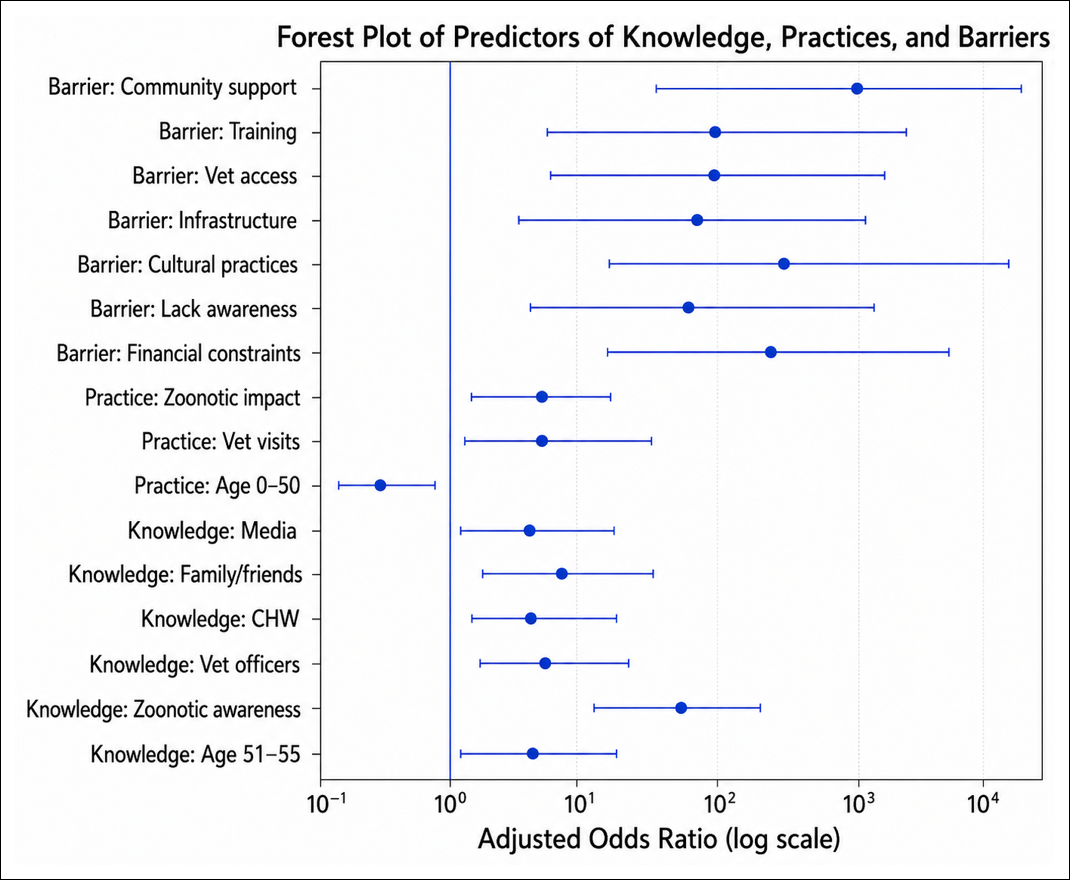
Figure 5. Forest plot of factors independently associated with knowledge of biosecurity and zoonotic diseases, current biosecurity practices, and barriers to biosecurity adoption among small-scale livestock farmers (n = 151). Variables with p ≤ 0.20 in the bivariate analyses were included in the corresponding multivariable logistic regression models. The vertical reference line at AOR = 1 indicates no association.
| Model component |
Knowledge of biosecurity
and zoonotic diseases |
Current biosecurity
practices | Barriers to biosecurity adoption |
|---|---|---|---|
| Omnibus test (χ², df, p) | 102.97, 5, <0.001 | 60.94, 5, <0.001 | 99.77, 5, <0.001 |
| −2 log likelihood | 104.45 | 144.88 | 95.94 |
| Cox and Snell R² | 0.494 | 0.332 | 0.484 |
| Nagelkerke R² | 0.662 | 0.446 | 0.666 |
| Hosmer–Lemeshow test (χ², df, p) | 2.78, 7, 0.905 | 2.56, 6, 0.862 | 3.71, 7, 0.812 |
| Overall classification accuracy (%) | 84.1 | 78.8 | 84.8 |
| Sensitivity (%) | 80.6 | 67.2 | 93.9 |
| Specificity (%) | 86.9 | 87.4 | 67.9 |
Table 10. Summary of logistic regression model diagnostics across study domains.
| Model component |
Knowledge of biosecurity
and zoonotic diseases |
Current biosecurity
practices | Barriers to biosecurity adoption |
|---|---|---|---|
| Omnibus test (χ², df, p) | 102.97, 5, <0.001 | 60.94, 5, <0.001 | 99.77, 5, <0.001 |
| −2 log likelihood | 104.45 | 144.88 | 95.94 |
| Cox and Snell R² | 0.494 | 0.332 | 0.484 |
| Nagelkerke R² | 0.662 | 0.446 | 0.666 |
| Hosmer–Lemeshow test (χ², df, p) | 2.78, 7, 0.905 | 2.56, 6, 0.862 | 3.71, 7, 0.812 |
| Overall classification accuracy (%) | 84.1 | 78.8 | 84.8 |
| Sensitivity (%) | 80.6 | 67.2 | 93.9 |
| Specificity (%) | 86.9 | 87.4 | 67.9 |
Factors associated with annual antimicrobial expenditure
Bivariate logistic regression analysis was used to evaluate factors associated with annual antimicrobial expenditure (Table 11). None of the evaluated variables was significantly associated with higher annual antimicrobial expenditure at p < 0.05.
Age and education categories were not significantly associated with annual antimicrobial expenditure. Respondents with no formal education had OR = 2.14 (95% CI: 0.82–5.61; p = 0.120). Knowledge of biosecurity and zoonotic diseases was associated with OR = 0.53 (95% CI: 0.28–1.02; p = 0.059), but the association did not reach statistical significance. Zoonotic disease awareness (OR = 0.66; 95% CI: 0.35–1.27; p = 0.216), positive attitudes toward biosecurity practices (OR = 0.95; 95% CI: 0.46–1.94; p = 0.881), adequate current biosecurity practices (OR = 0.67; 95% CI: 0.35–1.28; p = 0.221), and perceived barriers to biosecurity adoption (OR = 1.25; 95% CI: 0.64–2.45; p = 0.513) were also not significantly associated with annual antimicrobial expenditure.
| Variable | Category | B | SE | Exp(B) | 95% CI | p-value |
|---|---|---|---|---|---|---|
| Age group | ||||||
| Age group | 0–50 years (Ref) | −0.34 | 0.35 | 0.711 | 0.361–1.401 | 0.324 |
| Age group | 51–55 years | −0.42 | 0.44 | 0.659 | 0.277–1.564 | 0.344 |
| Age group | 56–62 years | 0.28 | 0.38 | 1.327 | 0.631–2.789 | 0.456 |
| Age group | ≥62 years | 0.45 | 0.39 | 1.571 | 0.732–3.374 | 0.246 |
| Education level | ||||||
| Education level | Primary education | −0.13 | 0.43 | 0.879 | 0.377–2.047 | 0.765 |
| Education level | Secondary education | −0.37 | 0.33 | 0.694 | 0.365–1.322 | 0.267 |
| Education level | Tertiary education | 0.11 | 0.40 | 1.116 | 0.505–2.469 | 0.786 |
| Education level | No formal education (Ref) | 0.76 | 0.49 | 2.143 | 0.819–5.606 | 0.120 |
| Knowledge and biosecurity factors | ||||||
| Knowledge of biosecurity and zoonotic diseases | Yes | −0.63 | 0.33 | 0.533 | 0.277–1.024 | 0.059 |
| Awareness of zoonotic diseases | Yes | −0.41 | 0.33 | 0.664 | 0.347–1.270 | 0.216 |
| Attitude toward biosecurity practices | Positive | −0.05 | 0.37 | 0.947 | 0.461–1.944 | 0.881 |
| Current biosecurity practices | Adequate | −0.41 | 0.33 | 0.666 | 0.348–1.277 | 0.221 |
| Barriers to biosecurity adoption | Yes | 0.22 | 0.34 | 1.251 | 0.640–2.446 | 0.513 |
Table 11. Bivariate logistic regression analysis of factors associated with annual antimicrobial expenditure among small-scale livestock farmers (n = 151).
| Variable | Category | B | SE | Exp(B) | 95% CI | p-value |
|---|---|---|---|---|---|---|
| Age group | ||||||
| Age group | 0–50 years (Ref) | −0.34 | 0.35 | 0.711 | 0.361–1.401 | 0.324 |
| Age group | 51–55 years | −0.42 | 0.44 | 0.659 | 0.277–1.564 | 0.344 |
| Age group | 56–62 years | 0.28 | 0.38 | 1.327 | 0.631–2.789 | 0.456 |
| Age group | ≥62 years | 0.45 | 0.39 | 1.571 | 0.732–3.374 | 0.246 |
| Education level | ||||||
| Education level | Primary education | −0.13 | 0.43 | 0.879 | 0.377–2.047 | 0.765 |
| Education level | Secondary education | −0.37 | 0.33 | 0.694 | 0.365–1.322 | 0.267 |
| Education level | Tertiary education | 0.11 | 0.40 | 1.116 | 0.505–2.469 | 0.786 |
| Education level | No formal education (Ref) | 0.76 | 0.49 | 2.143 | 0.819–5.606 | 0.120 |
| Knowledge and biosecurity factors | ||||||
| Knowledge of biosecurity and zoonotic diseases | Yes | −0.63 | 0.33 | 0.533 | 0.277–1.024 | 0.059 |
| Awareness of zoonotic diseases | Yes | −0.41 | 0.33 | 0.664 | 0.347–1.270 | 0.216 |
| Attitude toward biosecurity practices | Positive | −0.05 | 0.37 | 0.947 | 0.461–1.944 | 0.881 |
| Current biosecurity practices | Adequate | −0.41 | 0.33 | 0.666 | 0.348–1.277 | 0.221 |
| Barriers to biosecurity adoption | Yes | 0.22 | 0.34 | 1.251 | 0.640–2.446 | 0.513 |
B = Regression coefficient; Exp(B) = Exponentiated regression coefficient; SE = Standard error; CI = Confidence interval. Values <1 indicate lower odds and values >1 indicate greater odds of belonging to the high annual antimicrobial expenditure category. Statistical significance was set at p < 0.05.
Multivariable analysis of factors associated with annual antimicrobial expenditure
Multivariable logistic regression analysis was conducted to evaluate factors independently associated with high annual antimicrobial expenditure (Table 12). None of the variables included in the model was statistically significant at p < 0.05.
No formal education was associated with AOR = 2.05 (95% CI: 0.77–5.43; p = 0.150). Knowledge of biosecurity and zoonotic diseases had an AOR of 0.52 (95% CI: 0.22–1.22; p = 0.133), whereas adequate current biosecurity practices had an AOR of 0.68 (95% CI: 0.35–1.34; p = 0.269). Zoonotic disease awareness (AOR = 1.09; 95% CI: 0.46–2.58; p = 0.851) and perceived barriers to biosecurity adoption (AOR = 1.19; 95% CI: 0.59–2.39; p = 0.623) were also not significantly associated with annual antimicrobial expenditure.
| Variable | B | SE | AOR [Exp(B)] | 95% CI | p-value |
|---|---|---|---|---|---|
| No formal education | 0.72 | 0.50 | 2.046 | 0.771–5.432 | 0.150 |
| Knowledge of biosecurity and zoonotic diseases | −0.65 | 0.43 | 0.521 | 0.223–1.220 | 0.133 |
| Awareness of zoonotic diseases | 0.08 | 0.44 | 1.087 | 0.457–2.582 | 0.851 |
| Barriers to biosecurity adoption | 0.17 | 0.35 | 1.191 | 0.594–2.390 | 0.623 |
| Current biosecurity practices | −0.38 | 0.34 | 0.683 | 0.348–1.343 | 0.269 |
Table 12. Multivariable logistic regression analysis of factors associated with annual antimicrobial expenditure among small-scale livestock farmers (n = 151).
| Variable | B | SE | AOR [Exp(B)] | 95% CI | p-value |
|---|---|---|---|---|---|
| No formal education | 0.72 | 0.50 | 2.046 | 0.771–5.432 | 0.150 |
| Knowledge of biosecurity and zoonotic diseases | −0.65 | 0.43 | 0.521 | 0.223–1.220 | 0.133 |
| Awareness of zoonotic diseases | 0.08 | 0.44 | 1.087 | 0.457–2.582 | 0.851 |
| Barriers to biosecurity adoption | 0.17 | 0.35 | 1.191 | 0.594–2.390 | 0.623 |
| Current biosecurity practices | −0.38 | 0.34 | 0.683 | 0.348–1.343 | 0.269 |
B = Regression coefficient; SE = Standard error; CI = Confidence interval. Variables included in the multivariable model were selected from the bivariate analysis using p ≤ 0.20. AOR values <1 indicate lower odds and values >1 indicate greater odds of belonging to the high annual antimicrobial expenditure category. Statistical significance was set at p < 0.05.
DISCUSSION
Novelty and contribution of the current study
This study makes several original contributions to understanding biosecurity practices among small-scale livestock farmers in South Africa. This study provides district-level evidence from the Ngaka Modiri Molema District of the North West Province, using multivariable logistic regression to quantify factors associated with biosecurity adoption among small-scale livestock farmers. Second, the study integrates antibiotic use patterns and expenditure within the broader context of antimicrobial stewardship and potential AMR risk within a One Health framework, alongside conventional KAP assessments. Third, awareness of the effects of zoonotic diseases on human health and the economy (AOR = 14.12) and access to veterinary services (AOR = 12.80) were independently associated with biosecurity adoption, identifying potentially important areas for intervention in resource-limited livestock production systems.
Collectively, these findings help bridge knowledge gaps concerning behavioral factors, institutional barriers, antimicrobial use, and antimicrobial stewardship and provide locally relevant evidence for strengthening zoonotic disease prevention and biosecurity in rural farming communities. Furthermore, the use of composite KAP indicators and multivariable logistic regression enabled the identification of independent factors associated with biosecurity adoption, extending beyond studies that have primarily focused on individual zoonotic diseases or descriptive assessments of farming practices. The predominant reported use of tetracycline-based products further provides evidence of antimicrobial use behavior that warrants consideration within the broader context of antimicrobial stewardship in resource-limited livestock production systems.
The study provides important insights into the KAP related to biosecurity and zoonotic disease prevention among small-scale livestock farmers in the North West Province of South Africa from a One Health perspective. The findings demonstrate important associations among knowledge, behavioral factors, structural constraints, and biosecurity practices. They also reveal a substantial discrepancy between awareness, attitudes, and the practical implementation of biosecurity measures, with implications for zoonotic disease prevention, antimicrobial stewardship, and AMR risk mitigation. General awareness of zoonotic diseases remained low, with 56.3% of farmers reportedly unaware of diseases transmissible from animals to humans. This finding is particularly important because knowledge is an important component of preventive behavior and risk perception.
Knowledge and awareness of zoonotic diseases
The low level of zoonotic disease awareness observed in this study is consistent with previous studies from low- and middle-income countries, where inadequate awareness of zoonotic diseases among smallholder farmers has been frequently reported [7, 8]. Knowledge gaps also remain an important challenge in Sub-Saharan Africa, particularly in rural livestock production systems [9]. In the present study, zoonotic disease awareness was strongly associated with knowledge of biosecurity and zoonotic diseases (AOR = 46.64; p < 0.001), suggesting that targeted awareness programs may be important in rural communities.
The present findings also support previous South African studies reporting inadequate knowledge of zoonotic diseases, including brucellosis and bovine tuberculosis, as well as poor implementation of biosecurity and disease control practices among communal and emerging livestock farmers [31–33]. Research conducted in communal farming systems and livestock–wildlife interface areas in KwaZulu-Natal, South Africa, has identified substantial gaps in knowledge of zoonotic disease transmission, poor adoption of preventive measures, and limited use of veterinary services among livestock owners [31]. Similarly, recent South African studies have highlighted deficiencies in stakeholder knowledge, attitudes, and perceptions regarding bovine brucellosis and bovine tuberculosis control programs [32, 33]. Such gaps are particularly relevant within the human–animal–environment continuum because they may increase opportunities for pathogen transmission across these interfaces [31]. The present study extends these observations by using multivariable logistic regression to quantify factors independently associated with knowledge and biosecurity practices. This analytical approach helps identify priority areas for targeted One Health interventions beyond the predominantly descriptive assessments of knowledge and practices reported previously [31–33].
Although the present study did not conduct disease-specific regression analyses, the zoonotic diseases included in the questionnaire have important public health implications for small-scale livestock production systems. Brucellosis and bovine tuberculosis are commonly associated with direct contact with infected animals, reproductive materials, and contaminated animal products, whereas anthrax may be associated with contact with infected animal carcasses and contaminated environments. Rabies is also an important concern at the animal–human interface, particularly where livestock, dogs, wildlife, and humans interact. Rift Valley fever is also influenced by environmental and climatic factors that affect vectors and disease transmission. Therefore, inadequate farmer knowledge of these diseases may limit recognition of zoonotic disease risks and implementation of appropriate preventive measures.
Sources of animal health information and farmer knowledge
The role of veterinary officers, media, and social networks in shaping knowledge levels further underscores the importance of combining formal and informal communication approaches through agricultural extension systems and community-based information networks. Access to information from veterinary officers, media, and social networks was associated with greater knowledge. Farmer education and extension services have similarly been identified as important factors associated with biosecurity compliance [15]. These findings indicate that strengthening professional information channels while recognizing the role of community-based information networks may support improved dissemination of biosecurity and zoonotic disease information among small-scale livestock farmers.
Attitudes toward biosecurity and the knowledge–practice gap
Although attitudes toward biosecurity were generally favorable, they were not consistently reflected in actual practices. This discrepancy illustrates a knowledge–practice gap, where awareness alone may be insufficient to produce behavioral change without enabling conditions. Similar gaps have been reported in KAP studies of livestock production systems [8, 20]. For example, although farmers recognized the importance of disease control, only 16.6% reported implementing quarantine, whereas only 9.9% reported regular access to veterinary services. The strong association between veterinary service access and biosecurity adoption observed in this study is consistent with evidence from other low- and middle-income settings indicating that veterinary extension services play an important role in supporting disease prevention practices. The finding that only 9.9% of farmers reported regular veterinary consultation highlights an important service access gap and suggests that strengthening veterinary service provision may contribute to improved biosecurity implementation among small-scale livestock farmers in the region.
Structural and economic barriers to biosecurity implementation
These findings indicate that important barriers to biosecurity implementation are structural and economic rather than solely related to farmers' willingness to adopt preventive measures. Previous research has indicated that behavioral capability alone may be insufficient without enabling conditions, including infrastructure, financial resources, and veterinary access [20]. Similarly, the availability of water, sanitation, and hygiene facilities and veterinary support has been associated with biosecurity adoption [21]. The low adoption of several important biosecurity measures in the present study, particularly quarantine, carcass disposal, and veterinary consultation, may therefore have important implications for disease prevention.
The study also showed that inadequate financial resources, insufficient infrastructure, and limited awareness constrained biosecurity adoption. The strong associations observed for several of these factors indicate that barriers to biosecurity implementation are closely related to systemic and structural constraints rather than individual behavior alone. These findings align with previous studies that identify economic and structural limitations as key factors associated with inadequate biosecurity implementation in smallholder production systems [15, 20]. They underscore the need for context-specific, resource-sensitive interventions that reflect the practical circumstances of small-scale farmers, because generalized biosecurity recommendations may be difficult to implement without addressing underlying resource constraints. Biosecurity strategies should therefore be adapted to local socioeconomic conditions to facilitate their implementation [17].
Antimicrobial use patterns and implications for AMR risk
Tetracyclines were the predominant antimicrobial class reported by small-scale livestock farmers, accounting for 94.8% (128/135) of reported antibiotic classes used by farmers who provided antimicrobial use information. This marked predominance indicates substantial reliance on a single antimicrobial class. Although AMR was not measured directly, the combination of concentrated tetracycline use, limited veterinary oversight, and inadequate implementation of several biosecurity measures identifies conditions potentially relevant to inappropriate antimicrobial use and antimicrobial selection pressure. Unlike KAP studies that examine biosecurity and antimicrobial use separately, the present study considered both within the same analytical framework, providing a broader One Health perspective on factors potentially associated with AMR risk in resource-limited livestock production systems.
The predominance of tetracycline use is consistent with observations from other African livestock production systems, where tetracyclines are commonly used because of their affordability and broad-spectrum activity [21]. However, the present findings should not be interpreted as evidence of AMR because no microbiological susceptibility testing was performed. Rather, the high reported use of tetracyclines, together with low implementation of important preventive measures such as quarantine (16.6%) and limited veterinary consultation (9.9%), indicates conditions potentially relevant to antimicrobial selection pressure when antimicrobials are used unnecessarily or inappropriately.
Annual antibiotic expenditure was not significantly associated with demographic characteristics or KAP variables. Nevertheless, the regression analyses showed non-significant trends toward lower odds of high antibiotic expenditure among farmers with greater knowledge of biosecurity and zoonotic diseases and among those with adequate biosecurity practices. These associations did not reach statistical significance and therefore cannot establish that improved knowledge or biosecurity reduces antimicrobial use. However, they warrant further investigation because improved farm hygiene, disease prevention, and biosecurity have been associated with reduced infection pressure and antimicrobial consumption in other livestock production systems [21].
The findings further indicate that the context surrounding antimicrobial use is influenced by socioeconomic and structural conditions. Many farmers reported financial constraints, inadequate infrastructure, and limited access to veterinary services, while they financed animal health expenditures through diverse sources, including pensions, social grants, livestock sales, salaries, and informal income or support. These conditions may influence farmers' ability to obtain professional veterinary advice and implement preventive measures. Consequently, awareness programs alone may be insufficient to improve antimicrobial stewardship. Context-specific interventions incorporating veterinary extension, community support networks, agricultural services, and appropriate biosecurity education may be more applicable to resource-limited small-scale livestock production systems.
One Health implications for biosecurity and antimicrobial stewardship
The findings suggest that potential AMR-related risks in small-scale livestock production systems should be considered within a broader behavioral, socioeconomic, and institutional context rather than solely as a microbiological issue. More than half of the farmers (56.3%) were unaware of zoonotic diseases, while implementation of important biosecurity practices remained low, including quarantine (16.6%), proper waste and carcass disposal (24.5%), and veterinary consultation (9.9%). At the same time, tetracyclines accounted for 94.8% of reported antibiotic use. Although these findings do not demonstrate the presence or emergence of AMR, they identify conditions potentially relevant to antimicrobial stewardship and AMR prevention. Similar concerns regarding inadequate biosecurity and poorly regulated antimicrobial use have been reported in low- and middle-income settings [15, 21].
Limited veterinary access is particularly relevant because only 9.9% of farmers reported veterinary visits or consultations. Farmers also relied on informal information sources, including family members and friends. Although such networks can facilitate information dissemination, they may not consistently provide evidence-based guidance regarding disease prevention or antimicrobial stewardship. Limited interaction between farmers and formal veterinary services may therefore constrain effective biosecurity implementation and informed antimicrobial decision-making, as reported in other smallholder livestock production systems [20, 22].
These findings support a One Health perspective in which antimicrobial use is considered in relation to human behavior, animal health and management, socioeconomic conditions, and the environment. Knowledge gaps, inadequate biosecurity, financial limitations, infrastructure constraints, and restricted veterinary access may interact to influence disease prevention and antimicrobial use decisions. Such interconnected factors are particularly important at the human–animal–environment interface, where weaknesses in preventive systems may have consequences extending beyond individual farms [1, 4, 34]. Strengthening farm-level biosecurity may therefore be an important intervention for disease prevention and may also help reduce unnecessary antimicrobial use.
Integrated One Health opportunities for intervention
A notable feature of the present study was the combined assessment of biosecurity practices, zoonotic disease awareness, veterinary service access, and antibiotic use patterns. In addition to descriptive KAP assessment, multivariable analysis was used to examine factors independently associated with biosecurity practices. Access to veterinary services (AOR = 12.80) was associated with biosecurity practices. Furthermore, assessment of antibiotic use patterns and sources of funding for animal health care, including pensions, social grants, livestock sales, salaries, and informal income or support, provided additional insight into the socioeconomic context in which disease prevention and antimicrobial use decisions are made.
These findings provide locally relevant evidence that may inform One Health and antimicrobial stewardship initiatives. Biosecurity education and antimicrobial stewardship programs may be more contextually appropriate when incorporated into established veterinary extension, agricultural development, and community-based programs rather than delivered solely as stand-alone awareness activities. Because farmers relied on multiple household and social sources to finance animal health care, integrating biosecurity and antimicrobial stewardship education into existing support structures may improve program accessibility and relevance for resource-limited producers.
The findings also highlight the potential value of coordination among veterinary services, public health institutions, environmental agencies, agricultural extension services, and local community structures. Although these sectors have distinct responsibilities for animal health, zoonotic disease prevention, environmental management, and antimicrobial stewardship, coordinated One Health activities could facilitate surveillance, information sharing, farmer education, and early disease detection.
Practical implications for small-scale livestock systems
The findings indicate several potential areas for context-specific intervention. Strengthening veterinary extension services could improve farmers' access to technical guidance on disease prevention, biosecurity, and appropriate antimicrobial use. Training programs should also emphasize translating knowledge into feasible farm-level practices, particularly quarantine, appropriate management of sick animals, carcass and waste disposal, and antimicrobial stewardship. Improving access to affordable veterinary services may facilitate greater use of professional guidance for animal health and antimicrobial use decisions [20, 21].
At a broader level, coordinated One Health action involving animal health, public health, agricultural, environmental, and community sectors may help address the multiple factors associated with inadequate biosecurity and antimicrobial use. Such an approach may strengthen disease prevention, improve antimicrobial stewardship, and support sustainable livestock production among resource-limited small-scale farmers [1, 34].
CONCLUSION
This study provides district-level evidence on the KAP and barriers related to biosecurity and zoonotic disease prevention among 151 small-scale livestock farmers in the Ngaka Modiri Molema District Municipality, North West Province, South Africa. Although farmers generally recognized the importance of biosecurity, substantial gaps remained between positive attitudes and implementation of preventive practices. Awareness of individual zoonotic diseases was limited, and critical biosecurity measures were poorly implemented, including quarantine of new or sick animals (16.6%), appropriate waste and carcass disposal (24.5%), and veterinary consultation (9.9%). Structural constraints were prominent, particularly inadequate infrastructure (73.5%), financial constraints (70.9%), and lack of awareness (64.9%). Correspondingly, 83.4% of farmers indicated that improved access to veterinary services would facilitate biosecurity implementation, and 76.2% identified disease control training as an important support requirement.
Multivariable analysis further demonstrated that biosecurity outcomes were associated predominantly with awareness, access to information, veterinary support, and structural conditions rather than demographic characteristics alone. Zoonotic disease awareness was strongly associated with knowledge of biosecurity and zoonotic diseases (AOR = 46.64; 95% CI: 13.78–157.88; p < 0.001), whereas veterinary visits or consultations (AOR = 12.80; 95% CI: 2.35–69.80; p = 0.003) and awareness of the effects of zoonotic diseases (AOR = 14.12; 95% CI: 5.50–36.25; p < 0.001) were independently associated with biosecurity practices. Tetracyclines accounted for 94.8% of reported antibiotic use among farmers who reported using antibiotics. However, neither the bivariate nor multivariable analyses identified statistically significant predictors of annual antibiotic expenditure. Therefore, these antimicrobial use findings indicate potential stewardship concerns but should not be interpreted as evidence of AMR.
A major strength of this study was the integrated assessment of biosecurity KAP, perceived barriers, zoonotic disease awareness, veterinary service access, and antibiotic use patterns within a One Health framework. The use of composite outcome measures and multivariable logistic regression extended the analysis beyond a descriptive KAP survey and enabled identification of factors independently associated with key biosecurity outcomes. The inclusion of socioeconomic factors and sources of funding for animal health care further provided locally relevant insight into the circumstances influencing disease prevention and antimicrobial use decisions among resource-limited livestock farmers.
The findings should be interpreted in light of several limitations. The cross-sectional design precludes determination of temporal or causal relationships between the identified factors and biosecurity outcomes. Purposive non-probability sampling and the inclusion of farmers from selected villages limit the generalizability of the findings to all small-scale livestock farmers in the district, North West Province, or South Africa. Questionnaire responses were self-reported and may therefore have been affected by recall and social-desirability biases. Formal pilot testing and internal-consistency assessment using Cronbach's alpha were not performed. In addition, using sample-derived mean scores to classify KAP domains may limit comparability with other populations. The relatively small sample size contributed to wide CIs for several adjusted estimates, and the multivariable model for attitudes did not converge because of limited variation and quasi-complete separation. Finally, antimicrobial use was assessed primarily through reported antibiotic classes and expenditure rather than dose, treatment duration, indication, prescription status, or standardized measures of antimicrobial consumption, and laboratory-based antimicrobial susceptibility testing was not performed. Consequently, the study cannot determine the prevalence or emergence of AMR.
Future studies should use larger, probability-based samples across multiple districts and provinces to determine whether the observed biosecurity patterns are consistent across small-scale livestock production systems. Longitudinal and intervention studies are needed to evaluate whether improved veterinary access, targeted farmer education, strengthened infrastructure, and community-based biosecurity programs produce sustained improvements in preventive practices. Future questionnaires should undergo formal validation and reliability assessment, and standardized KAP thresholds should be explored to improve comparability among studies. Antimicrobial use investigations should quantify active compounds, indications, doses, treatment duration, frequency, sources of medicines, and veterinary prescription or supervision. Integrating these data with bacterial isolation, antimicrobial susceptibility testing, and appropriate molecular characterization of resistance determinants would enable direct assessment of relationships among farm biosecurity, antimicrobial use, and AMR within the human–animal–environment interface.
The findings demonstrate a substantial gap between recognition of the importance of biosecurity and its practical implementation among small-scale livestock farmers in the study area. Awareness of zoonotic diseases and access to veterinary services emerged as important factors associated with knowledge and biosecurity practices, whereas financial, infrastructural, and institutional constraints remained prominent barriers. These findings indicate that awareness campaigns alone are unlikely to improve biosecurity. A context-specific One Health approach that combines accessible veterinary services, practical farmer training, feasible farm-level biosecurity measures, community engagement, and antimicrobial stewardship is warranted. Strengthening these interconnected components may improve zoonotic disease prevention and responsible antimicrobial use while supporting animal health, public health, and sustainable small-scale livestock production in resource-limited communities.
DATA AVAILABILITY
The full datasets are presented in this manuscript. Further information can be obtained from the corresponding author.
GENERATIVE AI DECLARATION
The authors used QuillBot and Grammarly only to edit the language, correct grammar, and rephrase sentences for better clarity and readability. These tools were not used for scientific data generation, statistical analysis, interpretation of results, or conclusions. All AI-assisted editing of the manuscript was verified and discussed with the authors, who are solely responsible for the correctness, integrity, and final text of the manuscript.
AUTHORS’ CONTRIBUTIONS
MET: Conceptualization, methodology, investigation, data curation, formal analysis, validation, visualization, writing – original draft, and writing – review and editing. BGM: Conceptualization, methodology, supervision, project administration, resources, validation, and writing – review and editing. Both authors participated in the interpretation and discussion of the data, critically revised the manuscript for important intellectual content, and read and approved the final manuscript.
COMPETING INTERESTS
The authors declare that they have no competing interests.
PUBLISHER’S NOTE
Veterinary World remains neutral with regard to jurisdictional claims in the published institutional affiliations.
ACKNOWLEDGMENTS
The authors thank the Department of Agriculture and Animal Health of the University of South Africa for providing the necessary facilities for this study. The authors did not receive any funds for this study. The APC was funded by the University of South Africa, Florida, Science Campus.
REFERENCES
- Mumford EL, Martinez DJ, Tyance-Hassell K, Cook A, Hansen GR, Labonté R. Evolution and expansion of the One Health approach to promote sustainable and resilient health and well-being: a call to action. Front Public Health 2023;10:1056459. [Google Scholar]
- Mackenzie JS, Jeggo M. The One Health approach—why is it so important? Trop Med Infect Dis. 2019;4(2):88. [Google Scholar]
- Hulme PE. One biosecurity: a unified concept to integrate human, animal, plant, and environmental health. Emerg Top Life Sci 2020;4(5):539-549. [Google Scholar]
- Erkyihun GA, Alemayehu MB. One Health approach for the control of zoonotic diseases. Zoonoses 2022;2(1):963. [Google Scholar]
- Özlü H, Atasever M, Atasever MA. Knowledge, attitude, and practices of cattle farmers regarding zoonotic diseases in Erzurum, Turkey. Aust Vet Sci 2020;52(3):79-85. [Google Scholar]
- Youssef DM, Wieland B, Knight GM, Lines J, Naylor NR. The effectiveness of biosecurity interventions in reducing the transmission of bacteria from livestock to humans at the farm level: a systematic literature review. Zoonoses Public Health 2021;68(6):549-562. [Google Scholar]
- Alemayehu G, Mamo G, Desta H, Alemu B, Wieland B. Knowledge, attitude, and practices to zoonotic disease risks from livestock birth products among smallholder communities in Ethiopia. One Health 2021;12:100223. [Google Scholar]
- Chowdhury T, Ahmed J, Hossain MT, Roy MC, Ashik-Uz-Zaman M, Uddin MN. Knowledge, attitudes and biosecurity practices among small-scale dairy farmers in Sylhet district, Bangladesh. Vet Med Sci 2023;9(5):2221-2229. [Google Scholar]
- Ateudjieu J, Siewe Fodjo JN, Ambomatei C, Tchio-Nighie KH, Zoung Kanyi Bissek AC. Zoonotic diseases in Sub-Saharan Africa: a systematic review and meta-analysis. Zoonotic Dis 2023;3(4):251-265. [Google Scholar]
- Mankad A. Psychological influences on biosecurity control and farmer decision-making: a review. Agron Sustain Dev 2016;36(2):40. [Google Scholar]
- Munyaneza CM, Bizimana F, Mukumbo FM, Gatesi S, Sibomana E, Munyampuhwe S. Knowledge, attitudes, practices (KAP), and risk factors toward zoonotic diseases among smallholder livestock farmers in Bugesera District of Rwanda. Front Public Health 2025;13:1569682. [Google Scholar]
- Majiwa H, Bukachi SA, Omia D, Fèvre EM. Knowledge, perceptions, and practices around zoonotic diseases among actors in the livestock trade in the Lake Victoria crescent ecosystem in East Africa. Front Public Health 2024;11:1199664. [Google Scholar]
- Lane JK, Kelly T, Bird B, Chenais E, Roug A, Vidal G. A One Health approach to reducing livestock disease prevalence in developing countries: advances, challenges, and prospects. Annu Rev Anim Biosci 2025;13(1):277-302. [Google Scholar]
- Von Loeper W, Musango J, Brent A, Drimie S. Analysing challenges facing smallholder farmers and conservation agriculture in South Africa: a system dynamics approach. S Afr J Econ Manag Sci 2016;19(5):747-773. [Google Scholar]
- Msimang V, Rostal MK, Cordel C, Machalaba C, Tempia S, Bagge W. Factors affecting the use of biosecurity measures for the protection of ruminant livestock and farm workers against infectious diseases in central South Africa. Transbound Emerg Dis 2022;69(5):e1899-e1912. [Google Scholar]
- Lishomwa L. Farmers’ perspectives on post-border biosecurity: on farm biosecurity knowledge and practices. New South Wales: Charles Sturt University; 2016. [Google Scholar]
- Morris GC. Advancing agricultural biosecurity: education and spatial solutions for small-scale farm resilience. West Lafayette: Purdue University; 2024. [Google Scholar]
- Magwedere K. Veterinary public health aspects related with food-producing wildlife species in the domestic animal, human and environment interface. Stellenbosch: Stellenbosch University; 2013. [Google Scholar]
- Tsegaye D, Tamir B, Gebru G. Assessment of biosecurity practices and its status in small- and medium-scale commercial poultry farms in Arsi and East Showa Zones, Oromia, Ethiopia. Poultry 2023;2(2):334-348. [Google Scholar]
- Buckel A, Afakye K, Koka E, Price C, Kabali E, Caudell MA. Understanding the factors influencing biosecurity adoption on smallholder poultry farms in Ghana: a qualitative analysis using the COM-B model and theoretical domains framework. Front Vet Sci 2024;11:1324233. [Google Scholar]
- Jimenez CEP, Keestra S, Tandon P, Cumming O, Pickering AJ, Moodley A. Biosecurity and water, sanitation, and hygiene (WASH) interventions in animal agricultural settings for reducing infection burden, antibiotic use, and antibiotic resistance: a One Health systematic review. Lancet Planet Health 2023;7(5):e418-e434. [Google Scholar]
- Paramitadevi YV, Priadi CR, Rahmatika I, Rukmana A, Moersidik SS. Integration of water, sanitation, and hygiene program with biosecurity: a One Health approach to reduce the prevalence and exposure of antibiotic-resistant bacteria in the livestock community. Int J One Health 2023;9(2):181-193. [Google Scholar]
- United Nations Environment Programme. Antimicrobial resistance multi-partner trust fund annual report 2021: annual report 2023. Geneva: World Health Organization; 2023. [Google Scholar]
- MacPhillamy I, Olmo L, Young J, Nampanya S, Suon S, Khounsy S. Changes in farmer animal health and biosecurity knowledge, attitudes and practices: insights from Cambodia and Laos. Transbound Emerg Dis 2022;69(4):e517-e531. [Google Scholar]
- Cloete A, Gerstenberg C, Mayet N, Tempia S. Brucellosis knowledge, attitudes and practices of a South African communal cattle keeper group. Onderstepoort J Vet Res 2019;86(1):e1-e10. [Google Scholar]
- Marumo B, Hlokwe TM, Kayoka-Kabongo PN. Seroprevalence of brucellosis in communal and smallholder cattle farming in North West Province, South Africa. Onderstepoort J Vet Res 2023;90(1):1-8. [Google Scholar]
- Mahole KC, Moroke ND, Mavetera N. Poverty levels among local municipalities in the NMMD of South Africa: a multidimensional scaling approach. Mediterr J Soc Sci 2014;5(2):549-557. [Google Scholar]
- Mariasusai P, Gopalan N, Behera SK, Larebo YM. Knowledge, attitude, and husbandry practices on zoonoses prevention and control among livestock farmers in Tamil Nadu, India. 2025. [Google Scholar]
- Tufa TB, Tufa TB, Regassa F, Amenu K, Stegeman JA, Hogeveen H. Livestock producers’ knowledge, attitude, and behavior regarding antimicrobial use, residues, and resistance in Ethiopia. Front Vet Sci 2023;10:1167847. [Google Scholar]
- Ngoshe YB, Etter E, Gomez-Vazquez JP, Thompson PN. Knowledge, attitudes, and practices of communal livestock farmers regarding livestock and zoonotic diseases at the livestock-wildlife interface in KwaZulu-Natal, South Africa. Int J Environ Res Public Health 2023;20:511. [Google Scholar]
- Squire SA, Ameleke GY, Sottie ET, Ohene-Asa H, Mensah N, Takyiakwaa D. Livestock farmers’ knowledge, attitudes and practices relating to zoonoses in the Coastal Savannah zone of Ghana. Int Health 2026;18(2):294-304. [Google Scholar]
- Kgasi AT, Michel AL. A knowledge, attitude and practices assessment of control measures for bovine tuberculosis and brucellosis towards a more effective approach to national control programs in South Africa. Trop Anim Health Prod 2025;57(1):15. [Google Scholar]
- De Boni L, van Heerden H, Henton MM. The status of bovine brucellosis in Gauteng Province, South Africa: implications for communal farming systems and disease control. J Interv Epidemiol Public Health 2024;7(4):1-16. [Google Scholar]
- Robinson TP, Bu DP, Carrique-Mas J, Fèvre EM, Gilbert M, Grace D. Antibiotic resistance is the quintessential One Health issue. Trans R Soc Trop Med Hyg 2016;110(7):377-380. [Google Scholar]