
ABSTRACT
Background and Aim: Schistosomiasis japonica remains endemic in Central Sulawesi, Indonesia, despite sustained control efforts. Oncomelania hupensis lindoensis, the sole intermediate host of Schistosoma japonicum in Indonesia, persists in agricultural environments where ecological conditions may influence transmission. However, longitudinal evidence on its seasonal population dynamics and microhabitat determinants remains limited. This study aimed to characterize seasonal changes in O. h. lindoensis populations and identify habitat and environmental factors associated with snail abundance in cocoa plantations and rice paddies in Napu Valley, Central Sulawesi.
Materials and Methods: A 12-month longitudinal observational study was conducted from January to December 2025 in four villages in Napu Valley. Cocoa plantations and rice paddies were each stratified into three habitat subtypes, with six sampling points per subtype, yielding 36 sampling sites. Snail populations were monitored monthly, and environmental parameters, including air, water, and soil temperatures, relative humidity, rainfall, water pH, and soil pH, were recorded. Vegetation and diatom communities were characterized using the Shannon–Wiener diversity index. Collected snails were examined for S. japonicum cercariae. Associations between snail density and environmental variables were evaluated statistically.
Results: Snail density increased from January, peaked in June, and subsequently declined in both habitat types. Cocoa plantations supported higher densities during January–June, whereas rice paddies had comparatively higher densities during July–December. Snail density differed significantly among cocoa plantation subtypes (Kruskal–Wallis H = 13.84, p < 0.001), with higher populations in habitats characterized by moderate vegetation cover and stable water sources; no significant difference occurred among rice paddy subtypes (p = 0.270). Cocoa plantations showed greater vegetation (1.82 vs. 1.67) and diatom (1.95 vs. 1.68) diversity. None of the measured climatic variables was significantly correlated with snail density (all p > 0.05). Among 2,847 examined snails, 68 were cercaria-positive (2.39%), with the highest infection rate recorded in June (4.12%).
Conclusion: O. h. lindoensis populations exhibit distinct seasonal and habitat-specific dynamics in Napu Valley. The concurrence of peak snail density and cercarial infection in June identifies a critical period for intensified surveillance, while persistence across both agricultural habitats supports integrated, habitat-targeted environmental management. These findings provide an ecological basis for more precisely timed snail control within One Health-oriented schistosomiasis elimination programs in Indonesia.
Keywords: cercarial infection, habitat ecology, Oncomelania hupensis lindoensis, One Health, population dynamics, Schistosoma japonicum, schistosomiasis, snail control.
INTRODUCTION
Schistosomiasis, caused by blood flukes of the genus Schistosoma, is a major neglected tropical disease that causes acute and chronic disease, adversely affects human health, and imposes substantial socioeconomic burdens [1, 2]. Globally, approximately 236 million people require preventive treatment for schistosomiasis annually, and the disease is associated with approximately 12,000 deaths [3]. In Southeast Asia, Schistosoma japonicum is the principal causative species and is characterized by a broad mammalian host range and substantial pathogenicity [4]. In Indonesia, schistosomiasis japonica was first documented in the Lindu Highlands of Central Sulawesi in 1935, followed by the identification of endemic areas in the Napu Highlands in 1971 and Bada Highlands in 2008 [5, 6]. Despite control measures implemented since 1974, including mass drug administration, health education, and snail control, transmission persists in these endemic areas [5, 7]. Recent surveillance has demonstrated fluctuating prevalence and the emergence of new transmission foci, further complicating elimination efforts in these geographically isolated mountainous areas [8].
The epidemiology of S. japonicum is particularly complex because the parasite can infect humans and a wide range of mammalian hosts. Large ruminants and other domestic animals have been identified as important reservoirs contributing to S. japonicum transmission in Indonesia [9]. Animal reservoirs may also contribute to the re-emergence of infection in areas where human schistosomiasis has previously been controlled [10]. In addition, snail control remains challenging because numerous suitable snail habitats persist, and drugs to control infection in animal reservoirs are not readily available in endemic areas. Indonesia has therefore established the Schistosomiasis Elimination Roadmap toward 2025 [11], emphasizing coordinated interventions under a One Health approach. Within this framework, understanding the ecology and population dynamics of the intermediate snail host is essential because environmental conditions that sustain snail populations can facilitate continued transmission among humans, animals, and their shared environments.
The freshwater amphibious snail Oncomelania hupensis lindoensis is the sole intermediate host of S. japonicum in Indonesia, making control of this snail an essential component of schistosomiasis prevention and elimination [12, 13]. This subspecies is native to Central Sulawesi and is adapted to the tropical montane environment of the region. Effective snail control requires a detailed understanding of the ecological factors governing its distribution, abundance, population dynamics, and habitat suitability [14, 15]. Habitats supporting Oncomelania hupensis are influenced by multiple environmental factors, including temperature, soil moisture, water-level fluctuations, vegetation cover, pH, and nutrient availability [16–18]. Previous research has identified environmental ranges favorable for snail survival and reproduction, including soil temperatures of 19°C–23°C, pH of 6.4–7.6, soil water content of 42%–75%, and vegetation cover of 70%–93% [19]. Furthermore, the geographic distribution of O. hupensis is closely associated with the transmission of S. japonicum [20, 21] highlighting the importance of ecological surveillance for identifying high-risk habitats and informing targeted control interventions.
Considerable progress has been made in understanding the ecology and environmental determinants of Oncomelania populations, particularly in China and the Philippines [22–24]. However, evidence from these settings cannot fully characterize the ecological conditions of O. h. lindoensis in the tropical montane landscapes of Central Sulawesi. In Indonesia, previous investigations have predominantly focused on snail distribution and schistosomiasis prevalence rather than longitudinal evaluation of seasonal snail population dynamics and their relationships with habitat-specific environmental characteristics [25]. Consequently, information remains limited regarding how snail abundance changes throughout an annual cycle in major agricultural habitats, whether population patterns differ among habitat subtypes, and which microhabitat characteristics contribute to persis-tent snail populations. In particular, the combined roles of vegetation structure, water-source characteristics, vegetation and diatom communities, and climatic and microclimatic variables in cocoa plantations and rice paddies have not been sufficiently characterized. This knowledge gap limits the ability to identify periods and habitats of greatest ecological risk and to determine the most appropriate timing and location for targeted snail control interventions in endemic areas of Central Sulawesi.
Therefore, this study aimed to characterize the spatial and temporal population dynamics of O. h. lindoensis and determine their relationships with key environmental and microhabitat factors in cocoa plantations and rice paddies in Napu Valley, Poso Regency, Central Sulawesi, Indonesia, over a 12-month period. Specifically, the study aimed to (1) identify the vegetation and diatom communities associated with snail habitats; (2) quantify seasonal changes in snail populations across cocoa plantation and rice paddy habitat subtypes; (3) evaluate the relationships between snail abundance and climatic and microclimatic variables, including temperature, humidity, rainfall, and pH; and (4) use the resulting seasonal and habitat-specific patterns to identify periods and ecological settings that may be prioritized for more precisely timed snail control interventions. These findings are expected to provide an ecological basis for habitat-targeted surveillance and integrated snail management within Indonesia's One Health-oriented schistosomiasis elimination program.
MATERIALS AND METHODS
Ethical approval
Ethical approval for the collection, handling, and examination of snail samples and the associated environmental data collection was obtained from the Research Ethics Commission of the National Research and Innovation Agency of Indonesia (Approval no. 69/KE.04/SK/04/2025, dated 14 January 2025). All sampling and laboratory procedures were conducted in accordance with the approved research protocol.
Study period and location
The study was conducted from January to December 2025 in four villages, Alitupu, Watumaeta, Kaduwa, and Dodolo, in Napu Valley, Poso Regency, Central Sulawesi, Indonesia (Figure 1). Napu Valley is an established schistosomiasis endemic area situated at approximately 1,000–1,200 m above sea level and characterized by a tropical montane climate with distinct wet and dry seasons [7]. The agricultural landscape comprises predominantly cocoa plantations and rice paddies, both of which provide suitable habitats for O. h. lindoensis.
1. Rice Paddy (Dodolo)
1. Sub type A (1°28’ 08.13” S 120° 19’23.53”E )
2. Sub type B (1° 28’ 59.38” S 120° 19’15.49”E)
3. Sub type C (1° 27’ 50.89” S 120° 19’07.59” E)
2. Cocoa Plantation
1. Sub type A (1°25’11.77” S 120° 21’16.59” E) (Alitupu)
2. Sub type B (1°24’ 32.51” S 120° 19’05.31” E)(Watumaeta)
3. Sub type C (1° 27’19.03” S 120° 18’44.02” E ) (Kaduwa)
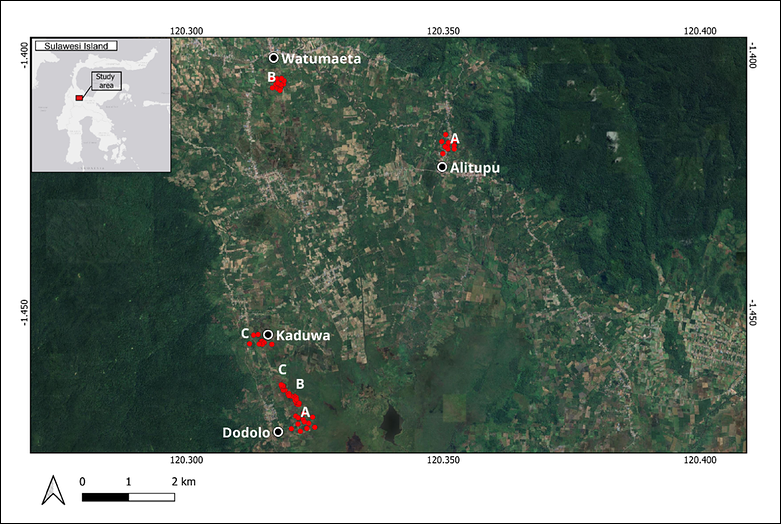
Figure 1. Location of rice paddy at the study villages in Napu Valley, Central Sulawesi, Indonesia [Source: The map was generated using Google Earth].
Study design and sampling strategy
This 12-month longitudinal observational study used a stratified sampling design to compare O. h. lindoensis populations and environmental characteristics between two major habitat types: cocoa plantations and rice paddies. Each habitat was classified into three subtypes according to vegetation cover, cultivation status, and water-source. Cocoa plantation subtype A had 60%–70% vegetation cover and received water from mountain springs; subtype B had 40%–50% vegetation cover and received water from irrigation channels; and subtype C had 10%–20% vegetation cover and received water from irrigation channels. Rice paddy subtype A comprised active paddies supplied with river water; subtype B comprised inactive paddies supplied with river water; and subtype C comprised converted paddies used as temporary plantations and supplied with river water.
Six sampling points were established for each habitat subtype, resulting in 36 sampling sites (6 sampling points × 3 subtypes × 2 habitat types). This stratification enabled longitudinal evaluation of snail populations and microhabitat characteristics across the principal habitat categories. Vegetation cover in cocoa plantations was estimated as the proportion of the total plantation area covered by cocoa vegetation and was expressed as a percentage.
Snail collection and examination
Snails within the quadrat were collected using forceps and subsequently placed in plastic clip bags. The snails collected from each observation site were then transported to the laboratory for morphological species identification. Identification was based on shell characteristics, including shell shape and size, direction and shape of the whorls, apex shape, shell height and width, aperture shape, and shell surface characteristics. These morphological characteristics were compared with the taxonomic descriptions of O. hupensis and the characteristics of the subspecies O. h lindoensis reported from Central Sulawesi. Snails exhibiting morphological characteristics consistent with O. h. lindoensis were confirmed as O. h. lindoensis. Taxonomic identification followed the classification and identification guidelines of the Indonesian Ministry of Health [23].In the laboratory, the snails were transferred to labeled Petri dishes, counted, and measured for shell length. Infection with S. japonicum was assessed using the crushing method [26]. Groups of three to four snails were gently compressed between two glass slides to expose the internal tissues, followed by the addition of one or two drops of water. The preparations were examined under a dissecting microscope at 40× magnification for the presence of S. japonicum cercariae.
Environmental parameter measurement
Environmental parameters were monitored monthly at each snail sampling site. Air temperature was measured at 1.5 m above ground level using an HTC-1 digital thermometer. Water temperature was measured using a mercury thermometer immersed 10 cm below the water surface, whereas soil temperature was measured at a depth of 5 cm using a digital soil thermometer. Temperature measurements were obtained between 10:00 and 12:00 h.
Relative humidity was measured using the HTC-1 meter. Water pH was measured using a calibrated digital pH meter, whereas soil pH was determined using a portable pH tester (Shenzhen Bestone Industrial Co. Ltd, Tiongkok, China). The instruments were calibrated against appropriate standard references before measurement.
Vegetation surveys were conducted photographically in June 2025, corresponding to the period of peak snail density. Plant species were initially identified using Google Lens and subsequently confirmed using botanical references. Vegetation diversity was quantified using the Shannon–Wiener diversity index (H′),
where S represents the number of species and pᵢ represents the proportion of individuals belonging to species i.
H’ = Shannon–Wiener diversity index
E = Sigma represents the sum of all values for each species
I= Number or sequence of the observed species—for example, the 1st, 2nd, 3rd species, and so on.
S = Total number of species found in the community
Pi= Proportion or relative abundance of the i-th species relative to all individuals
In=Natural logarithm (logarithm with base e)
– = Negative sign used to ensure the diversity index value is positive
Diatom sampling was conducted once in June 2025 using acrylic substrate traps placed within snail habitats. Acrylic sheets measuring 20 × 20 cm were secured with fine cords and submerged for 3 days. After retrieval, surfaces were gently brushed to collect attached material, which was then examined under a compound microscope at 40× magnification. Diatom taxa were identified using digital identification keys (https:// diatoms.org/citations/round_fe_crawford_rm_and_mann_dg-1990-the_diatoms_biology_and_morphology_of), and diatom diversity was evaluated using the Shannon–Wiener diversity index.
We obtained rainfall data for the study period from the Lore Lindu Bariri Global Atmospheric Monitoring Station of the Indonesian Agency for Meteorology, Climatology, and Geophysics (BMKG). Rainfall values were daily totals aggregated monthly.
Statistical analysis
Descriptive statistics for snail population density and environmental parameters were calculated and presented as mean ± standard deviation, stratified by habitat type and subtype. Data normality was assessed using the Shapiro–Wilk test. Because snail density data were not normally distributed (p < 0.05), nonparametric statistical methods were applied as appropriate. Differences in snail density among habitat subtypes were evaluated using the Kruskal–Wallis H test, followed by post hoc pairwise comparisons with Bonferroni correction. For normally distributed data (p > 0.05), parametric methods were applied, and differences in snail density among habitat subtypes were assessed using one-way analysis of variance.
Spearman's rank correlation coefficient (ρ) was used to evaluate associations between snail density and environmental variables, including temperature, humidity, pH, and rainfall. Statistical significance was set at p < 0.05. All statistical analyses were performed using SPSS version 27.0 (IBM Corporation, Armonk, NY, USA) and R version 4.3.0 (R Foundation for Statistical Computing, Vienna, Austria).
RESULTS
Vegetation and diatom communities
Vegetation and diatom communities differed between cocoa plantation and rice paddy habitats (Tables 1 and 2). Seven plant species were identified in cocoa plantations, compared with six species in rice paddies. The Shannon–Wiener diversity index for vegetation was 1.82 in cocoa plantations and 1.67 in rice paddies.
Eight diatom taxa were identified in cocoa plantations, compared with six taxa in rice paddies. The Shannon–Wiener diversity index for diatoms was 1.95 in cocoa plantations and 1.68 in rice paddies. The vegetation and diatom communities in both habitats were classified as moderately diverse.
| No. | Plant taxon | Cocoa plantation | Rice paddy |
|---|---|---|---|
| 1 | Pouzolzia zeylanica | – | √ |
| 2 | Gliricidia sepium | √ | – |
| 3 | Theobroma cacao | √ | – |
| 4 | Artocarpus heterophyllus | √ | – |
| 5 | Lansium domesticum | √ | – |
| 6 | Saccharum officinarum L. | √ | – |
| 7 | Ageratum conyzoides | – | √ |
| 8 | Acemella uliginosa | – | √ |
| 9 | Eryngium yuccifolium | – | √ |
| 10 | Melastoma denticulatum | – | √ |
| 11 | Imperata cindrica | – | √ |
| 12 | Coffea arabica | √ | – |
| 13 | Arenga pinnata | √ | – |
Table 1. Vegetation identified in snail habitats in cocoa plantations and rice paddies in the Napu Valley.
| No. | Plant taxon | Cocoa plantation | Rice paddy |
|---|---|---|---|
| 1 | Pouzolzia zeylanica | – | √ |
| 2 | Gliricidia sepium | √ | – |
| 3 | Theobroma cacao | √ | – |
| 4 | Artocarpus heterophyllus | √ | – |
| 5 | Lansium domesticum | √ | – |
| 6 | Saccharum officinarum L. | √ | – |
| 7 | Ageratum conyzoides | – | √ |
| 8 | Acemella uliginosa | – | √ |
| 9 | Eryngium yuccifolium | – | √ |
| 10 | Melastoma denticulatum | – | √ |
| 11 | Imperata cindrica | – | √ |
| 12 | Coffea arabica | √ | – |
| 13 | Arenga pinnata | √ | – |
√ = Present; – = Not detected.
| No. | Taxon | Cocoa plantation | Rice paddy |
|---|---|---|---|
| 1 | Synedra ulna | √ | √ |
| 2 | Navicula lanceolata Ehr | √ | √ |
| 3 | Closterium sp. | √ | – |
| 4 | Sprogyra | √ | – |
| 5 | Actinoptychus senarius | √ | √ |
| 6 | Actinoptychus sp. | √ | √ |
| 7 | Bacillariophyceae | √ | √ |
| 8 | Oedogonium (green alga) | √ | √ |
Table 2. Diatom and algal taxa identified in snail habitats in cocoa plantations and rice paddies in the Napu Valley.
| No. | Taxon | Cocoa plantation | Rice paddy |
|---|---|---|---|
| 1 | Synedra ulna | √ | √ |
| 2 | Navicula lanceolata Ehr | √ | √ |
| 3 | Closterium sp. | √ | – |
| 4 | Sprogyra | √ | – |
| 5 | Actinoptychus senarius | √ | √ |
| 6 | Actinoptychus sp. | √ | √ |
| 7 | Bacillariophyceae | √ | √ |
| 8 | Oedogonium (green alga) | √ | √ |
√ = Present; – = Not detected.
Snail population dynamics by habitat type
Monthly monitoring showed similar temporal patterns in O. h. lindoensis populations in cocoa plantations and rice paddies over the 12-month study period (Figures 2 and 3). Snail density increased from January, peaked in June, and then declined from July to December in both habitat types.
From January to June, cocoa plantations had higher snail densities than rice paddies, with maximum mean densities of 2828 ± 2463 snails/m². Conversely, from July to December, rice paddies had higher densities than cocoa plantations, with maximum mean densities of 1367 ± 1217 snails/m².
Snail population dynamics by habitat subtype
Snail densities differed significantly among the three cocoa plantation subtypes (Kruskal–Wallis H = 13.84, p < 0.001) (Figure 2). Subtypes A and B showed similar temporal patterns, with densities increasing from January, peaking in June, and subsequently declining through December. The reported mean densities at the June peak were 853.8 ± 425.1 snails/m² for subtype A and 610.1 ± 437.3 snails/m² for subtype B. Subtype C maintained comparatively lower densities during most of the study period, with a reported mean annual density of 325.9 ± 460.4 snails/m² and increases observed in June and from November to January.
Pairwise comparisons showed a significant difference between cocoa plantation subtypes A and C, whereas no significant differences were detected between subtypes B and C or between subtypes A and B.
All three rice paddy subtypes showed similar temporal trends during the first half of the year, with snail populations peaking in June (Figure 3). One-way analysis of variance showed no significant difference in snail density among the three rice paddy subtypes (F[2, 33] = 1.361, p = 0.270).
Association between climatic factors and snail populations
No measured climatic variable was significantly correlated with snail density in either cocoa plantations or rice paddies (all p > 0.05) (Table 3). Among the evaluated variables, water temperature showed the highest positive correlation coefficients, with ρ = 0.63 in cocoa plantations and ρ = 0.51 in rice paddies. Correlations between snail density and the remaining measured variables were weak or very weak.
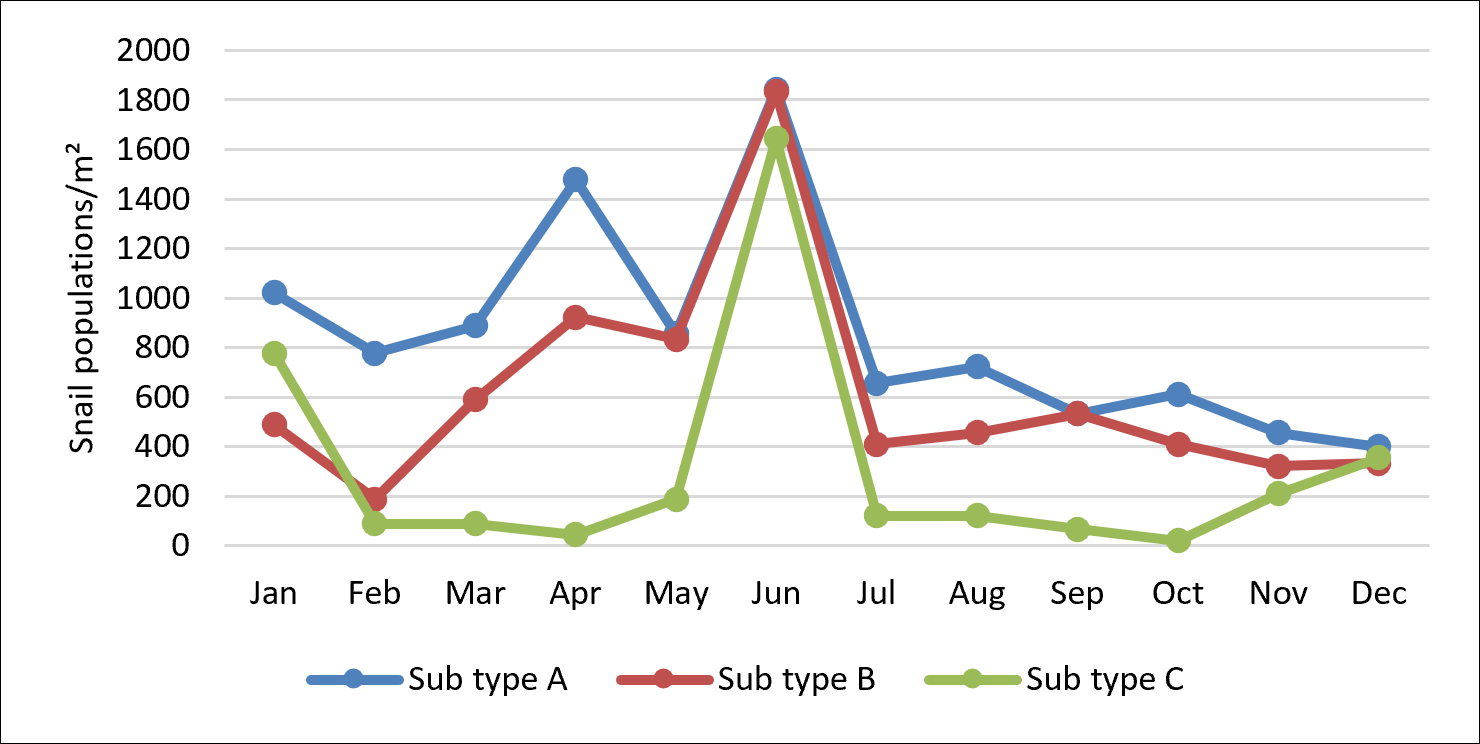
Figure 2. Population trends of O. h. lindoensis according to cocoa plantation habitat subtype in the Napu Valley, Poso Regency.
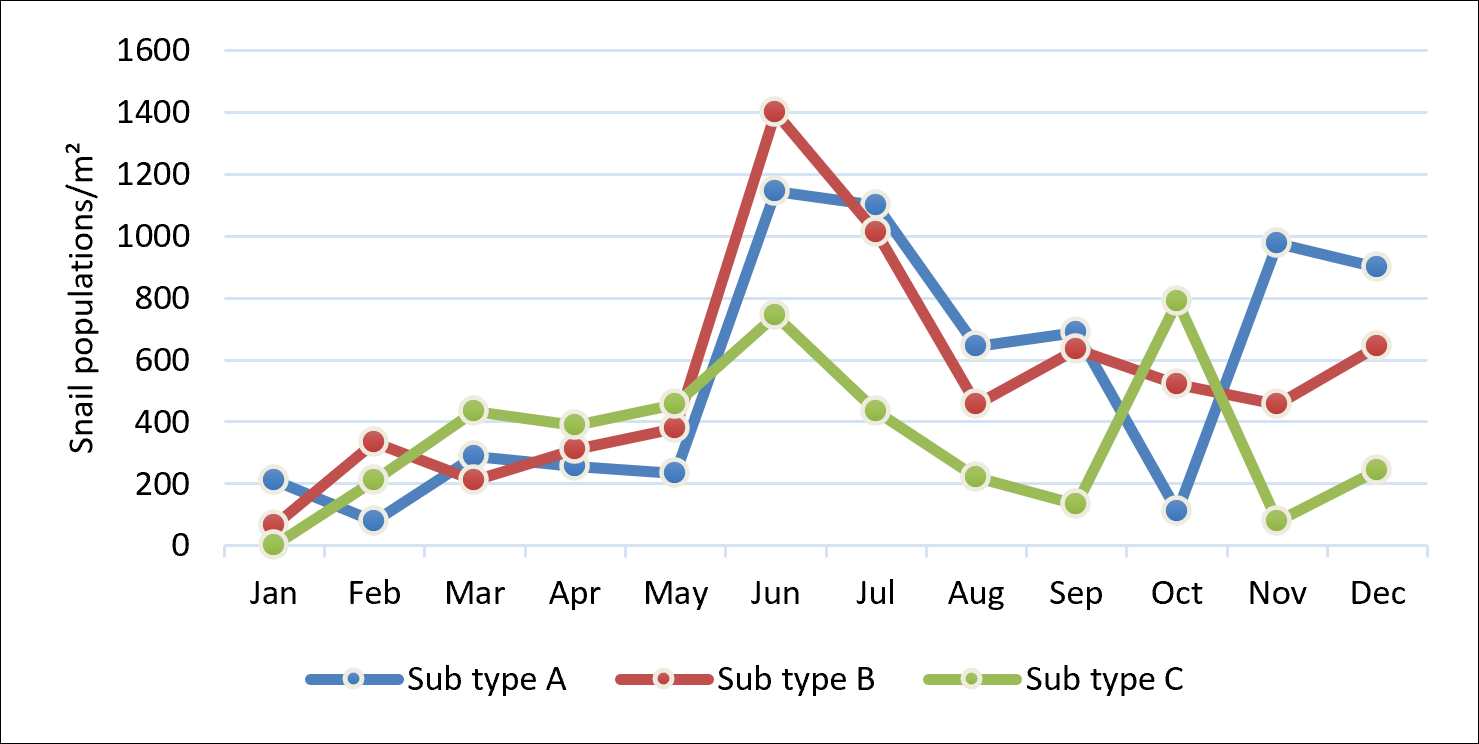
Figure 3. Population trends of O. h. lindoensis according to rice paddy habitat subtype in the Napu Valley, Poso Regency.
| Climatic factor | Mean ± SD | p, cocoa plantation | p, rice paddy | ρ, cocoa plantation | ρ, rice paddy |
|---|---|---|---|---|---|
| Air temperature (°C) | 21.53 ± 0.44 | 0.827 | 0.353 | 0.071 | −0.29 |
| Water temperature (°C) | 23.5 ± 0.79 | 0.260 | 0.860 | 0.63 | 0.51 |
| Humidity (%) | 84.49 ± 1.99 | 0.320 | 0.850 | 0.30 | 0.06 |
| Rainfall (mm) | 158.67 ± 94.20 | 0.520 | 0.480 | 0.20 | −0.22 |
| Water pH | 6.80 ± 0.38 | 0.770 | 0.750 | 0.09 | 0.10 |
| Soil pH | 6.83 ± 0.23 | 0.510 | 0.270 | 0.29 | 0.10 |
Table 3. Correlations between climatic factors and snail density in cocoa plantation and rice paddy habitats.
| Climatic factor | Mean ± SD | p, cocoa plantation | p, rice paddy | ρ, cocoa plantation | ρ, rice paddy |
|---|---|---|---|---|---|
| Air temperature (°C) | 21.53 ± 0.44 | 0.827 | 0.353 | 0.071 | −0.29 |
| Water temperature (°C) | 23.5 ± 0.79 | 0.260 | 0.860 | 0.63 | 0.51 |
| Humidity (%) | 84.49 ± 1.99 | 0.320 | 0.850 | 0.30 | 0.06 |
| Rainfall (mm) | 158.67 ± 94.20 | 0.520 | 0.480 | 0.20 | −0.22 |
| Water pH | 6.80 ± 0.38 | 0.770 | 0.750 | 0.09 | 0.10 |
| Soil pH | 6.83 ± 0.23 | 0.510 | 0.270 | 0.29 | 0.10 |
SD = Standard deviation; ρ = Spearman's rank correlation coefficient.
Cercarial infection rate
A total of 2,847 snails were examined, of which 68 were positive for cercarial infection, corresponding to an overall infection rate of 2.39%. Infection rates varied by habitat and month, with the highest prevalence recorded in June (4.12%), coinciding with the peak in snail density.
Cercaria-positive snails were detected in both habitat types. The infection rate was 2.67% in rice paddies and 2.18% in cocoa plantations. This difference was not statistically significant (χ² = 1.42, p = 0.233).
DISCUSSION
Habitat characteristics and snail ecology
This longitudinal study showed that O. h. lindoensis populations in the Napu Valley were associated with specific habitat characteristics, particularly vegetation cover and the presence of stable water sources. Cocoa plantations exhibited greater plant diversity than rice paddies, reflecting the agroforestry characteristics of cocoa production systems in Central Sulawesi [27]. The number of plant species recorded in the present study was lower than the 22 species reported by Garjito et al. [28] in the Lindu region, which may reflect differences in local agroforestry practices, habitat composition, or sampling approaches.
Vegetation is an important component of Oncomelania habitats because it provides shade, promotes soil-moisture retention, moderates temperature fluctuations, and contributes organic matter that supports microbial and diatom communities used as food resources by snails [18, 19]. Previous studies have suggested that the relationship between vegetation cover and snail density is nonlinear, with moderate vegetation cover generally providing favorable habitat conditions. Excessive vegetation may reduce light penetration and water movement, whereas sparse vegetation may increase exposure to desiccation and thermal stress. In the present study, cocoa plantation subtypes with 40%–70% vegetation cover sustained higher snail densities than the subtype with 10%–20% cover, supporting the importance of vegetation structure in maintaining suitable snail microhabitats.
Diatoms also represent an important food resource for Oncomelania snails [29]. Eight diatom taxa were identified in cocoa plantations compared with six in rice paddies. This number was lower than the 35 species reported by Mahfuz et al. [30] in Dodolo Village, which may reflect differences in sampling intensity, substrate characteristics, habitat conditions, or taxonomic methods. Yang et al. [29] reported that soil diatom communities were positively associated with O. hupensis abundance, supporting the ecological relevance of the greater diatom diversity observed in cocoa plantation habitats in the present study. However, because diatoms were sampled only once during June, their temporal relationship with snail abundance cannot be determined from the present data.
Seasonal population dynamics and peak density timing
Snail populations in both cocoa plantations and rice paddies followed a similar seasonal pattern, increasing from January and reaching a peak in June before declining during the second half of the year. Comparable seasonal patterns have been reported for O. hupensis populations in the Poyang Lake Region of China, where snail density commonly increases during favorable hydrological and temperature conditions [31]. Such seasonal increases have been associated with stable water levels, reproduction, and juvenile survival [18, 29].
The June population peak observed in the Napu Valley occurred during the dry-season period, when perennial water sources remained available despite reduced rainfall. This pattern suggests that local water stability may be particularly important in maintaining suitable snail habitats. However, the present observational design does not establish the mechanisms responsible for the seasonal increase. The subsequent decline from July to December may reflect changes in reproduction, survival, habitat quality, agricultural disturbance, or other unmeasured ecological processes and therefore requires further investigation.
Seasonal differences were also evident between habitat types. Cocoa plantations supported higher snail densities during the first half of the year, whereas rice paddies supported comparatively higher densities during the second half. This temporal shift indicates that different agricultural habitats may contribute to snail persistence at different times of the year. In the Napu Valley, where rice cultivation occurs for much of the year [32], rice paddies may provide persistent or recurrent habitats for snails. Cocoa plantations may similarly maintain suitable microhabitats because of perennial vegetation and stable water availability. These findings emphasize the importance of considering both habitat type and season when designing snail surveillance and control programs.
The highest snail density was recorded in June, which also coincided with the highest cercarial infection rate. Within a One Health framework, this temporal concurrence is epidemiologically important because greater snail abundance and cercarial infection may increase opportunities for environmental transmission among snails, humans, and animal reservoir hosts. Accordingly, coordinated surveillance of snail populations and reservoir animals before the seasonal peak may help inform the timing of integrated control activities. Any intervention involving treatment of cattle, buffaloes, dogs, or other potential reservoirs should, however, follow established veterinary and public health recommendations.
Habitat subtype analysis and management implications
Differences among cocoa plantation subtypes further demonstrated the potential importance of vegetation cover and water-source characteristics. Subtypes A and B, characterized by 60%–70% and 40%–50% vegetation cover, respectively, maintained higher snail populations than subtype C, which had only 10%–20% vegetation cover. Previous modeling studies have suggested that vegetation cover within an intermediate range can support O. hupensis survival and reproduction, although the optimal range may vary among ecosystems. These relationships may be mediated by microclimate regulation, soil-moisture retention, food availability, and habitat stability.
Moderate vegetation cover may reduce desiccation by maintaining humid microenvironments while still permitting sufficient light for primary producers, including diatoms. Organic matter derived from vegetation may also support microbial communities that contribute to habitat quality. Nevertheless, these mechanisms were not directly tested in the present study and should therefore be interpreted cautiously.
Among rice paddy subtypes, snail populations were present in active, inactive, and converted paddies, and no significant difference in density was detected among the three subtypes. Snails in inactive paddies may be associated with persistent water, reduced agricultural disturbance, organic matter accumulation, and vegetation growth. Previous studies in Central Sulawesi have similarly identified uncultivated or minimally disturbed rice fields as persistent snail habitats. These observations suggest that environmental management should consider both cultivated and inactive agricultural areas rather than focusing exclusively on actively managed paddies. As in China, rice paddies have become a problem [14.
Climatic factors and snail population regulation
The weak and nonsignificant associations between the measured climatic variables and snail density suggest that no single climatic variable adequately explained snail population variation in the Napu Valley. Although rainfall has been associated with Oncomelania abundance in other endemic settings [33, 34], the present findings are consistent with studies emphasizing the complex and context-dependent effects of hydrology, microclimate, and habitat structure [18].
Several local factors may help explain the weak relationships observed. The Napu Valley lies at approximately 1,000–1,100 m above sea level and experiences relatively stable temperatures throughout the year. In addition, perennial water sources, including mountain springs and rivers, may maintain suitable moisture conditions even during periods of reduced rainfall. Vegetation cover may further buffer temperature and humidity fluctuations at ground level. Therefore, snail populations in this environment may respond to combinations of hydrological, biological, and microhabitat conditions rather than to individual climatic variables [35].
Olkeba et al. [36] identified numerous environmental determinants of Oncomelania distribution, including soil properties, water chemistry, vegetation, biotic interactions, and landscape characteristics. This complexity supports the use of multivariable and spatially explicit approaches in future studies [37]. The lack of significant associations between snail density and rainfall, humidity, temperature, water pH, and soil pH in the present study does not indicate that these factors are unimportant; rather, their effects may be mediated by local habitat characteristics or may not be detectable using the temporal and spatial resolution of the present dataset.
Cercarial infection and transmission risk
The overall cercarial infection rate was 2.39%, with the highest rate of 4.12% recorded in June. Widjaja et al. [8] reported temporal variation in infection rates in endemic areas of Central Sulawesi between 2017 and 2021, with changes occurring alongside integrated snail control activities. In the present study, the June peak in cercarial infection coincided with the highest snail density, suggesting that this period may represent an important time for intensified ecological and epidemiological surveillance.
Cercaria-positive snails were detected in both cocoa plantation and rice paddy habitats, indicating that infected snails were not restricted to a single agricultural environment. However, because the difference in infection rates between the two habitat types was not statistically significant, the present data do not support prioritizing one habitat solely on the basis of cercarial prevalence. The life cycle of S. japonicum involves humans and multiple mammalian reservoir hosts, including water buffaloes, pigs, rodents, and other susceptible animals [38]. Consequently, effective schistosomiasis control requires coordinated interventions directed toward human infection, animal reservoirs, snail populations, and environmental transmission pathways [7].
Implications for snail control strategies
The observed seasonal and habitat-specific patterns have practical implications for snail surveillance and control in the Napu Valley. Because snail density peaked in June, control measures undertaken before this seasonal increase may provide an opportunity to target populations before maximum abundance is reached. The original control proposal identifies April, approximately 2 months before the observed peak, as a potential intervention period. However, because the present study was observational and did not experimentally compare intervention timings, April should be considered a candidate period for future evaluation rather than an established optimal time for molluscicide application.
Environmental management may also be prioritized in habitats that consistently supported higher snail populations, particularly cocoa plantation subtypes with moderate vegetation cover and stable water sources and rice paddies in which snails persisted across cultivation states. Potential measures include appropriate vegetation management, improved drainage, and modification of irrigation structures to reduce prolonged water stagnation [39, 40]. Such approaches should be evaluated carefully to balance snail control objectives with agricultural productivity and environmental sustainability.
Engineering measures, including lined canals, regulated water flow, and periodic drainage, may help disrupt suitable breeding conditions in rice-growing areas [40]. Biological control has also been proposed as an alternative or complementary approach to chemical control [41]. Native snail species such as Sulawesidrobia sp. have been suggested as potential ecological competitors of O. h. lindoensis [42]; however, their effectiveness, ecological safety, and feasibility require rigorous assessment before any field application.
Long-term ecological surveillance should integrate snail abundance, infection status, habitat characteristics, agricultural practices, and environmental variables. Such monitoring would allow control strategies to be adjusted according to seasonal and habitat-specific changes [43] and could support more efficient allocation of resources within integrated schistosomiasis elimination programs.
Study limitations and future research directions
Several limitations should be considered when interpreting the findings. First, the study covered a single annual cycle; therefore, interannual variation in rainfall, agricultural practices, hydrology, and snail populations could not be assessed. Multi-year studies are needed to determine whether the observed June peak and habitat-specific patterns are consistent across years.
Second, quadrat-based sampling provided estimates of snail abundance but did not directly measure demographic processes such as survival, recruitment, movement, or recolonization. Mark–recapture or complementary demographic approaches could provide additional information on population turnover and habitat connectivity. Third, only a limited set of environmental variables was measured. Additional assessments of soil nutrients, water chemistry, organic matter, microbial communities, hydrological characteristics, and landscape structure could improve understanding of habitat suitability [17, 36].
Fourth, vegetation and diatom communities were not monitored at the same temporal frequency as snail density and climatic variables. In particular, diatom sampling was conducted only in June, limiting interpretation of seasonal associations between food-resource availability and snail abundance. Future research should incorporate repeated ecological sampling throughout the year.
Further studies should therefore include multi-year longitudinal surveillance, spatial modeling and remote sensing to identify suitable snail habitats [43, 37], genetic characterization of O. h. lindoensis populations to investigate connectivity and recolonization, and experimental or quasi-experimental evaluation of habitat-specific control measures. Socioeconomic and behavioral factors influencing community participation in environmental management should also be examined because sustained local engagement is essential for long-term schistosomiasis control [44].
Broader context of schistosomiasis elimination in Indonesia
Indonesia is still in the process of eliminating schistosomiasis [45]. Although implementation of the National Schistosomiasis Elimination Roadmap has contributed to progress in endemic areas, important challenges remain, including intersectoral coordination, involvement of the animal health sector, diagnostic sensitivity at low infection intensities, and coverage of mobile or geographically dispersed farming populations [44, 46].
The present findings support a One Health approach that integrates snail ecology, human infection control, management of animal reservoirs, agricultural land use, and environmental interventions. Coordinated action across human health, veterinary, agricultural, and environmental sectors is particularly important for S. japonicum because its transmission cycle involves multiple mammalian hosts and environmentally dependent intermediate snail hosts [47]. Sustainable elimination will therefore require continued surveillance, appropriate resource allocation, community participation, and adaptive control strategies based on local epidemiological and ecological evidence.
CONCLUSION
This 12-month longitudinal study demonstrated clear seasonal and habitat-specific variation in O. h. lindoensis populations in the Napu Valley, Central Sulawesi. Snail density increased from January and peaked in June in both cocoa plantations and rice paddies before declining toward the end of the year. Cocoa plantations supported higher snail densities during the first half of the year, whereas rice paddies supported comparatively higher densities during the second half. Snail density differed significantly among cocoa plantation subtypes, with habitats characterized by moderate vegetation cover and stable water sources sustaining higher populations, whereas no significant differences were detected among rice paddy subtypes. Cocoa plantations also supported greater vegetation and diatom diversity than rice paddies. Among 2,847 examined snails, 68 were cercaria-positive, corresponding to an overall infection rate of 2.39%, with the highest infection rate of 4.12% recorded in June. None of the measured climatic variables showed a significant correlation with snail density, indicating that local habitat characteristics may be more informative than individual climatic variables for understanding snail persistence in this setting.
A major strength of this study was its longitudinal design, which enabled monthly assessment of snail populations across an entire annual cycle and comparison of multiple habitat subtypes within two important agricultural environments. Integrating snail abundance, cercarial infection, vegetation and diatom characteristics, and environmental measurements provided a broader ecological perspective than cross-sectional surveys and helped identify periods and habitats that warrant greater surveillance attention.
Overall, the findings indicate that schistosomiasis control in the Napu Valley should consider both seasonal population dynamics and habitat-specific ecological conditions. The concurrence of peak snail density and cercarial infection in June highlights the importance of intensified surveillance before and during this period, while the persistence of snails across cocoa plantation and rice paddy habitats supports integrated environmental management rather than reliance on a single-habitat approach. These findings provide a locally derived ecological basis for more precisely targeted snail surveillance and control and reinforce the value of integrating human, animal, agricultural, and environmental sectors within One Health-oriented schistosomiasis elimination efforts in Indonesia.
DATA AVAILABILITY
The supplementary data can be made available from the corresponding author upon request.
GENERATIVE AI DECLARATION
The authors declare that generative artificial intelligence (AI) tools were used solely to improve language, grammar, and readability during manuscript preparation. All scientific content, data analysis, interpretation of results, and conclusions were developed and verified by the authors. The authors take full responsibility for the accuracy, integrity, and originality of the work presented, and no AI tool was listed as an author.
AUTHORS’ CONTRIBUTIONS
JW, FS, YR, and TAG: Conceptualization, study design, and writing – original draft. JW: Investigation, data curation, formal analysis, and project administration. FS, YR, and TAG: Writing – review and editing. All authors have read and approved the final manuscript.
COMPETING INTERESTS
The authors declare that they have no competing interests.
PUBLISHER NOTE
Veterinary World (Publisher of the International Journal of One Health) remains neutral regarding jurisdictional claims in the published map and institutional affiliations.
ACKNOWLEDGMENTS
The authors thank the National Research and Innovation Agency of Indonesia for financial support (grant no. 6/III.9/HK/2025). The authors also thank the village leaders and community members of Alitupu, Watumaeta, Kaduwa, and Dodolo for their cooperation during the study; the Lore Lindu Bariri Global Atmospheric Monitoring Station of the Indonesian Agency for Meteorology, Climatology, and Geophysics (BMKG) for providing meteorological data; and the local health personnel and laboratory personnel for their assistance with fieldwork and laboratory analyses.
REFERENCES
- Wang Z, Liu L, Shi L, Wang X, Zhang J, Li W. Identifying the Determinants of Distribution of Oncomelania hupensis Based on Geographically and Temporally Weighted Regression Model along the Yangtze River in China. 2022. [Google Scholar]
- Metrics GH. Global burden of 369 diseases and injuries in 204 countries and territories , 1990 – 2019 : a systematic analysis for the Global Burden of Disease Study 2019. Lancet (London, England) 2020;396(10258):1204-22. [Google Scholar]
- Lv C, Li Y, Deng W, Bao Z, Xu J, Lv S. The Current Distribution of Oncomelania hupensis Snails in the People's Republic of China Based on a Nationwide Survey. Trop Med Infect Dis 2023;8(2):120. [Google Scholar]
- Gordon CA, Acosta LP, Gray DJ, Olveda RM, Jarilla B, Gobert GN. High Prevalence of Schistosoma japonicum Infection in Carabao from Samar Province , the Philippines : Implications for Transmission and Control. PLoS Negl Trop Dis 2012;6(9):e1778. [Google Scholar]
- Sudomo M, M.D S. Schistosomiasis Control in Indonesia. Bul Penelit Kesehat 2007;35:36-45. [Google Scholar]
- Satrija F, Ridwan Y, Rauf A. Current status of schistosomiasis in Indonesia. Acta Trop 2015;141(Pt B):349-53. [Google Scholar]
- Bergquist R, Utzinger J, Keiser J. Controlling schistosomiasis with praziquantel: How much longer without a viable alternative? Infect Dis Poverty. 2017;6:74. [Google Scholar]
- Widjaja J, Widawati AN, Nursafingi A, Kurniawan A, Ullyartha H. The Impact of Snail Control on Intestinal Schistosomiasis Endemic Areas in Indonesia. J Commun Dis 2023;55(3):14-20. [Google Scholar]
- Budiono NG, Satrija F, Ridwan Y, Handharyani E, Murtini S. The contribution of domestic animals to the transmission of schistosomiasis japonica in the Lindu Subdistrict of the Central Sulawesi Province , Indonesia. Vet World 2019;12(10):1591-1598. [Google Scholar]
- Liang S, Yang C, Zhong B, Qiu D. Re-emerging schistosomiasis in hilly and mountainous areas of Sichuan, China. 2006. [Google Scholar]
- Roadmap Eradikasi Schistosomiasis 2018-2025 [Internet]. 2018. Bappenas; 2018. 50 p. [Google Scholar]
- Xu J, Li S, Zhang L, Bergquist R, Dang H, Wang Q. Surveillance-based evidence : elimination of schistosomiasis as a public health problem in the Peoples ’ Republic of China. Infect Dis Poverty 2020;9:63. [Google Scholar]
- Lv S, Xu J, Li YL, Bao ZP, Zhang LJ, Yang K. Snail control as a crucial approach to schistosomiasis elimination: evidence from the People’s Republic of China. Infect Dis Poverty 2025;14:10. [Google Scholar]
- Zhou Y, Liang S, Chen G, Rea C, He Z, Zhang Z. An Integrated Strategy for Transmission Control of Schistosoma japonicum in a Marshland Area of China : Findings from a Five-Year Longitudinal Survey and Mathematical Modeling. Am J Trop Med Hyg 2011;85(1):83-88. [Google Scholar]
- Gong Y, Tong Y, Jiang H, Xu N, Yin J, Wang J. Three Gorges Dam : the changing trend of snail density in the Yangtze River basin between 1990 and 2019. Infect Dis Poverty 2023;12(1):45. [Google Scholar]
- Wu JY, Zhou YB, Chen Y, Liang S, Li LH, Zheng SB. Three Gorges Dam: Impact of water level changes on the density of schistosome- Transmitting snail oncomelania hupensis in Dongting Lake Area, China. PLoS Negl Trop Dis 2015;9(6):e000382. [Google Scholar]
- Seto EYW, Wu W, Liu H, Chen H, Hubbard A, Holt A. Impact of Changing Water Levels and Weather on Oncomelania hupensis hupensis Populations , the Snail Host of Schistosoma japonicum , Downstream of the Three Gorges Dam. Ecohealth 2008;5(2):149-58. [Google Scholar]
- Liu MM, Feng Y, Yang K. Impact of micro environmental factors on survival , reproduction and distribution of Oncomelania hupensis snails. 2021. Infect Dis Poverty [Internet]. 2021;10:47. [Google Scholar]
- Huang J. Identification of optimum scopes of environmental drivers for schistosome- transmitting Oncomelania hupensis using agent-based model in Dongting Lake Region ,. Parasitology 2024;151(12):1355-63. [Google Scholar]
- Niu Y, Li R, Qiu J, Xu X, Huang D, Shao Q. Identifying and predicting the geographical distribution patterns of oncomelania hupensis. Int J Environ Res Public Health 2019;16(12):2206. [Google Scholar]
- Xia C, Bergquist R, Lynn H, Hu F, Lin D, Hao Y. Village-based spatio-temporal cluster analysis of the schistosomiasis risk in the Poyang Lake Region , China. Parasit Vectors 2017;10:136. [Google Scholar]
- Zhou XN, Wang LY, Chen MG, Wu XH, Jiang QW, Chen XY. The public health significance and control of schistosomiasis in China - Then and now. Acta Trop 2005;96(2-3):97-105. [Google Scholar]
- Leonardo L, Chigusa Y, Kikuchi M, Kato-Hayashi N, Kawazu S-I, Angeles JM. Schistosomiasis in the Philippines: Challenges and some successes in control. Southeast Asian J Trop Med Public Health 2016;47(4):651-66. [Google Scholar]
- Olveda DU, Inobaya M, Olveda RM, Vinluan ML, Ng S-K, Weerakoon K. Diagnosing schistosomiasis-induced liver morbidity: implications for global control. Int J Infect Dis IJID Off Publ Int Soc Infect Dis 2017;54:138-44. [Google Scholar]
- Koraag ME, Octaviani O, Massie RGA, Senewe FP, Djohan D. Environmental factors associated with Oncomelania hupensis lindoensis snails in a schistosomiasis-endemic area in Napu, Central Sulawesi. J Water Health 2024;22(9):1641. [Google Scholar]
- Ministry of Health of the Republic of Indonesia. Guidelines for Surveillance and Control of Intermediate Snails and Reservoir Animals of Schistosomiasis. 2022. [Google Scholar]
- Akhir N, Syarif Z. Productivity of Various Cocoa-Based Agroforestry Systems in Pasaman Regency, West Sumatra. Agroforestri Indones 2019;2:51-62. [Google Scholar]
- Garjito1 TA, Mujiyanto2 JW, Udin2 Y, Malonda Maksud2 AK. Habitats Distribution of Oncomelania hupensis lindoensis snail Intermediate Host of Schistosoma jappnicum in Lindu Valley, Sigi District, Province of Central Sulawesi. Bul Penelit Kesehat 2014;42(3):139-52. [Google Scholar]
- Yang X, Zhang Q, Id LM, Sun Q, Id SL. Afforestation suppresses Oncomelania hupensis snail density through influencing algae in beaches of the Dongting Lake. 2021. PLoS Negl Trop Dis [Internet]. 2021;15(2):e0009100. [Google Scholar]
- Ramadhanil P. Keanekaragaman Perifiton pada Habitat Keong Oncomelania hupensis-linduensis di Desa Dodolo Sulawesi Tengah. Biocelebes 2013;7(1):1-8. [Google Scholar]
- Ross AGP, Sleigh AC, Li Y, Davis GM, Williams GM, Jiang Z. Schistosomiasis in the People ’ s Republic of China : Prospects and Challenges for the 21st Century. Clin Microbiol Rev 2001;14(2):270. [Google Scholar]
- Badan Pusat Statistik Provinsi Sulawesi Tengah. Luas Panen dan Produksi Padi di Sulawesi Tengah 2024 ( Angka Tetap ). 2024. [Google Scholar]
- Mcmanus DP, Gray DJ, Li Y, Feng Z, Williams GM, Stewart D. Schistosomiasis in the People ’ s Republic of China : the Era of the Three Gorges Dam. Clin Microbiol Rev 2010;23(2):442-66. [Google Scholar]
- Kironde FK, Kabatereine NB, Kategere P, Kazibwe F. Effect of Seasonal Rainfall and other Environmental Changes , On Snail Density and Infection Rates With Schistosoma Mansoni Fifteen Years After The Last Snails ’ Study In Kigungu , Entebe ,. East Afr Med J 2008;85(11):556-63. [Google Scholar]
- Carlton EJ, Bates MN, Zhong B, Seto EYW, Spear RC. Evaluation of Mammalian and Intermediate Host Surveillance Methods for Detecting Schistosomiasis Reemergence in Southwest China. PLoS Negl Trop Dis 2011;5(3):e987. [Google Scholar]
- Olkeba BK, Boets P, Mereta ST, Yeshigeta M, Akessa GM, Ambelu A. Environmental and biotic factors affecting freshwater snail intermediate hosts in the Ethiopian Rift Valley region. 2020. Parasit Vectors [Internet]. 2020;13:292. [Google Scholar]
- Xu J, Ouyang X, He Q, Wei G. Comprehensive Risk Assessment of Schistosomiasis Epidemic Based on Precise Identification of Oncomelania hupensis Breeding Grounds — A Case Study of Dongting Lake Area. Environ reaseach public Heal 2021;18:1950. [Google Scholar]
- Charisma AM, Naftalia A, Anwar A, Ramadhan P. Elimination of Schistosoma japonica in Central Sulawesi , Indonesia Intermediate Snail Control and Utilization Medicinal Plants. 2025. [Google Scholar]
- Gray DJ, McManus DP, Li Y, Williams GM, Bergquist R, Ross AG. Schistosomiasis elimination: lessons from the past guide the future. 2010. Lancet Infect Dis [Internet]. 2010;10(10):733–6. [Google Scholar]
- Hu Y, Xia C, Li S, Ward MP, Luo C, Gao F. Assessing environmental factors associated with regional schistosomiasis prevalence in Anhui Province , Peoples ’ Republic of China using a geographical detector method. 2017. [Google Scholar]
- Friani G, Margarida A, Mello-silva CC. Biological control of Biomphalaria , the intermediate host of Schistosoma spp .: a systematic review. Ciência Rural 2023;53:4. [Google Scholar]
- Widjaja J, Satrija F, Ridwan Y, Garjito TA. Sulawesidrobia sp Snails as Competitor Candidates for Intermediate Hosts of Schistosoma japonicum in the Bada Highlands of Poso Regency. ASPIRATOR - J Vector-Borne Dis Stud 2025;16(1):33-40. [Google Scholar]
- Zhang Z, Carpenter TE, Chen Y, Clark AB, Lynn HS, Peng W. Identifying high-risk regions for schistosomiasis in Guichi, China: A spatial analysis. Acta Trop 2008;107(3):217-23. [Google Scholar]
- Bergquist R, Yang G-J, Knopp S, Utzinger J, Tanner M. Surveillance and response: Tools and approaches for the elimination stage of neglected tropical diseases. 2015. [Google Scholar]
- Azhari AN, Putri AZ, Diptyanusa A, Sunardi S, Rezavitawanti R, Herdiana H. Schistosomiasis japonicum in Indonesia : Progress and Surveillance Needs in Verge-of-Elimination Settings. Trop Med Infect Dis 2026;11(4):86. [Google Scholar]
- Abokwara A, Madubueze CE, Chirove F. Understanding schistosomiasis transmission : A systematic review of mathematical models. Sci African 2025;30:e03077. [Google Scholar]
- Raji AO, Lawal HA, Suleiman ZA, Olayiwola AE, Muiz W, Tinuke OP. Integrative One Health strategies for the surveillance , control , and prevention of vector-borne and zoonotic diseases : bridging human , animal , and environmental health in a changing world. 2026;8(S1):e2. [Google Scholar]